
Steering — the piece to read first
Countersteering
Push the bar away from the corner and the machine falls in. The geometry is simple; why it feels backward is not.
Three layouts, three compromises
Engine as Layout
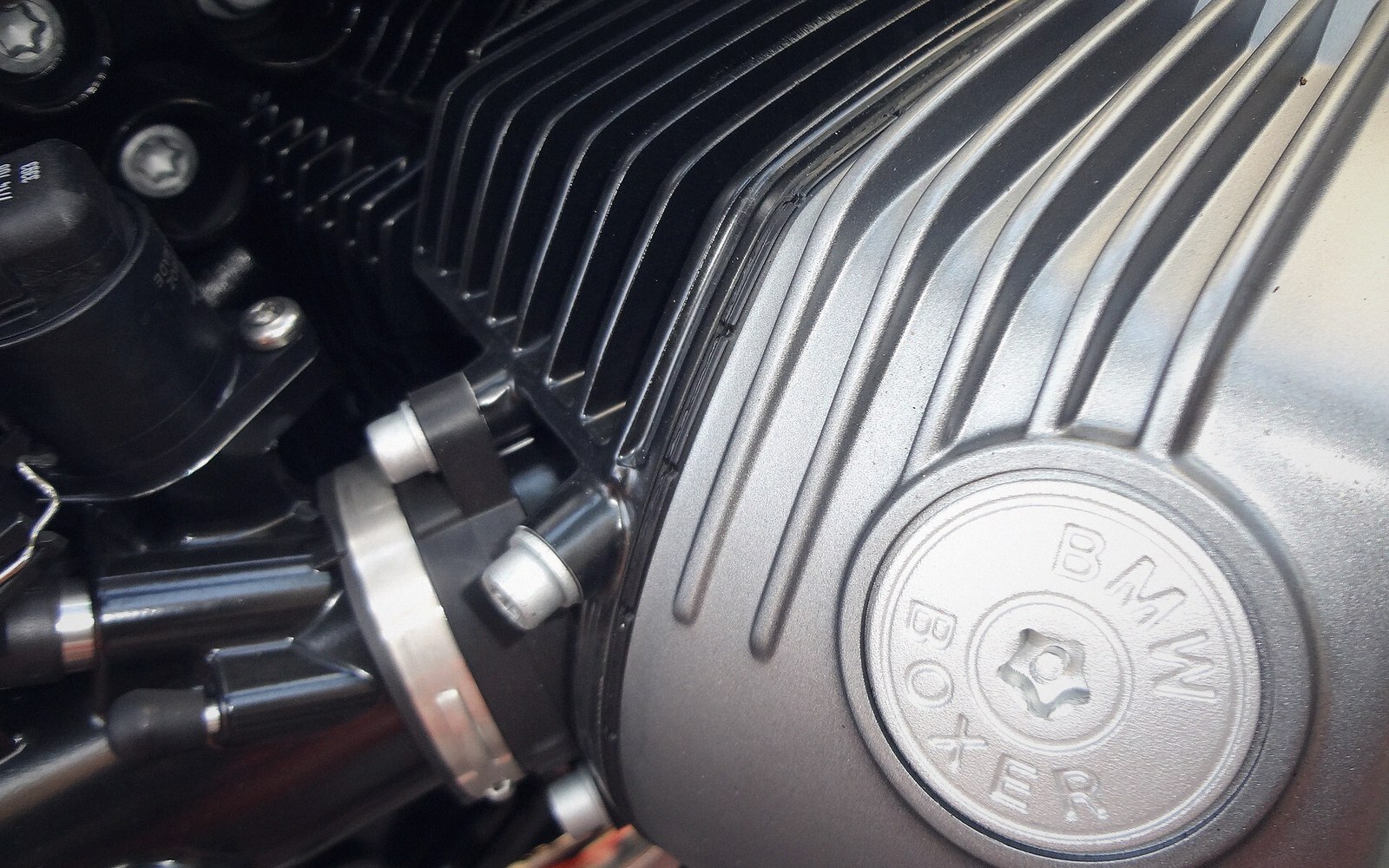
The flat twin
Cylinders in the airflow and mass carried low, at the cost of width and a torque reaction when you blip it.
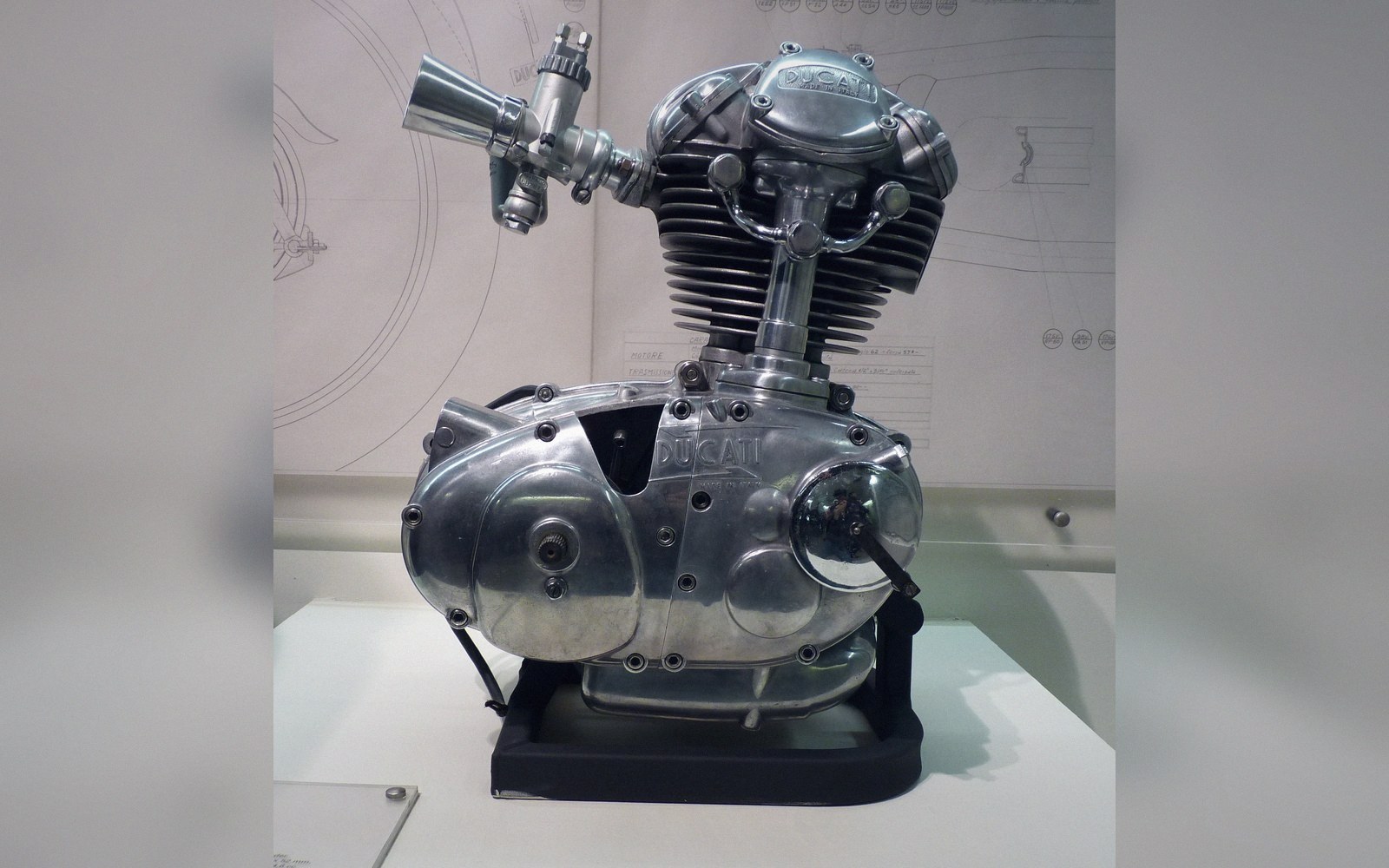
The L-twin
Narrow and long, which pushes the wheelbase out and puts the rear cylinder where the airflow is not.
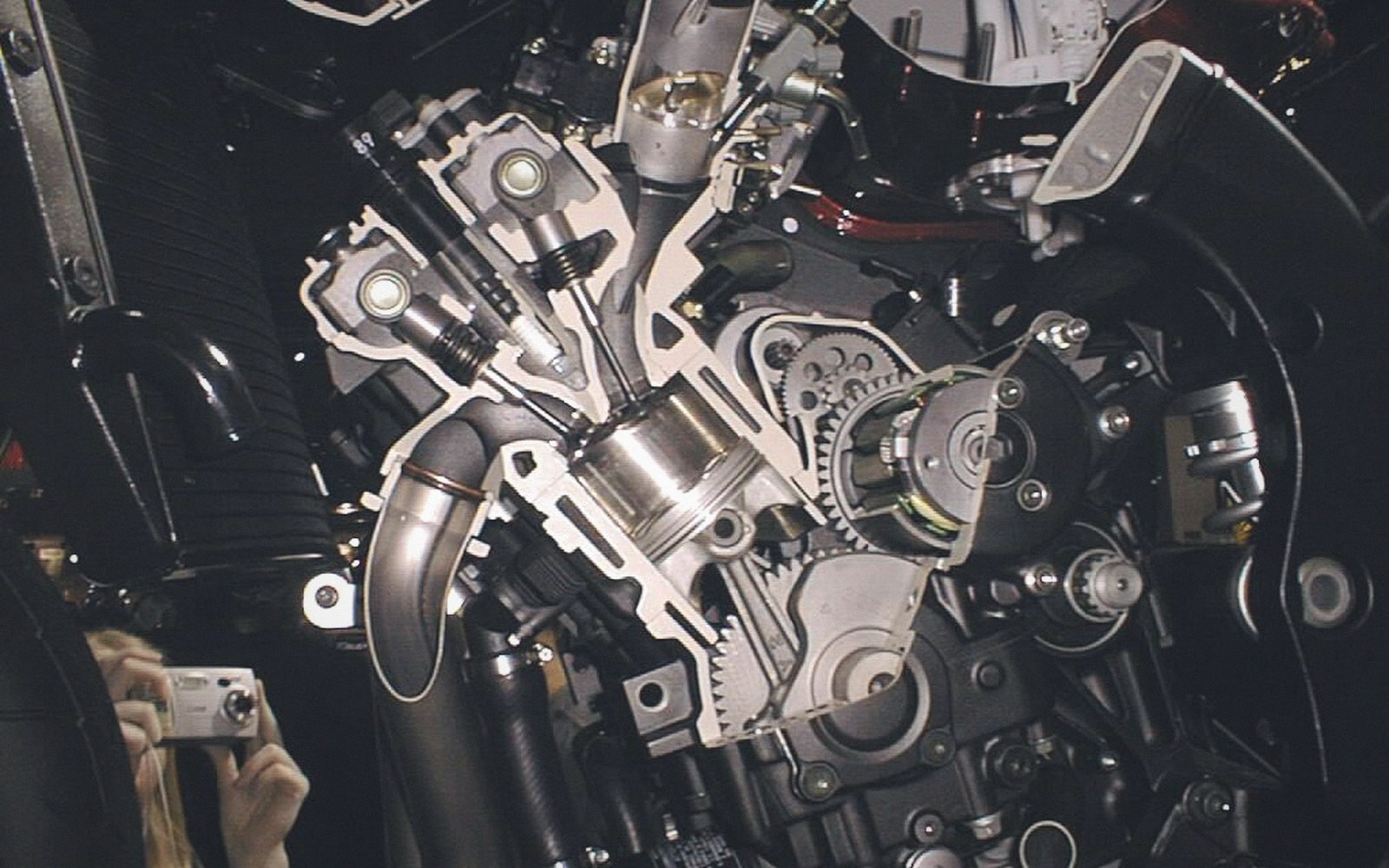
The inline four
Smooth and wide, and it sits high because the crank has to clear the ground.
Geometry
Trail is the distance behind the steering axis where the tyre actually touches the road. It is the reason the front wheel wants to point where you are going.
The front end, and the numbers it moves
All twenty piecesThe telescopic fork
Almost universal and structurally poor: it bends under braking and its damping fights its own suspension duty.
02Dive
The nose-down movement under braking is geometry changing while you are using it.
03Alternatives that lost
Hub-centre and leading-link systems separate braking from suspension and keep failing commercially.
04What a number hides
Static geometry is measured at rest; under braking the fork compresses and every figure changes.
05Wheelbase
Long is stable and slow to turn, short is quick and nervous; almost every other decision is negotiated against it.
06Weight distribution
Front-to-rear bias decides which end lets go first, and it changes with fuel load and a passenger.
Chassis
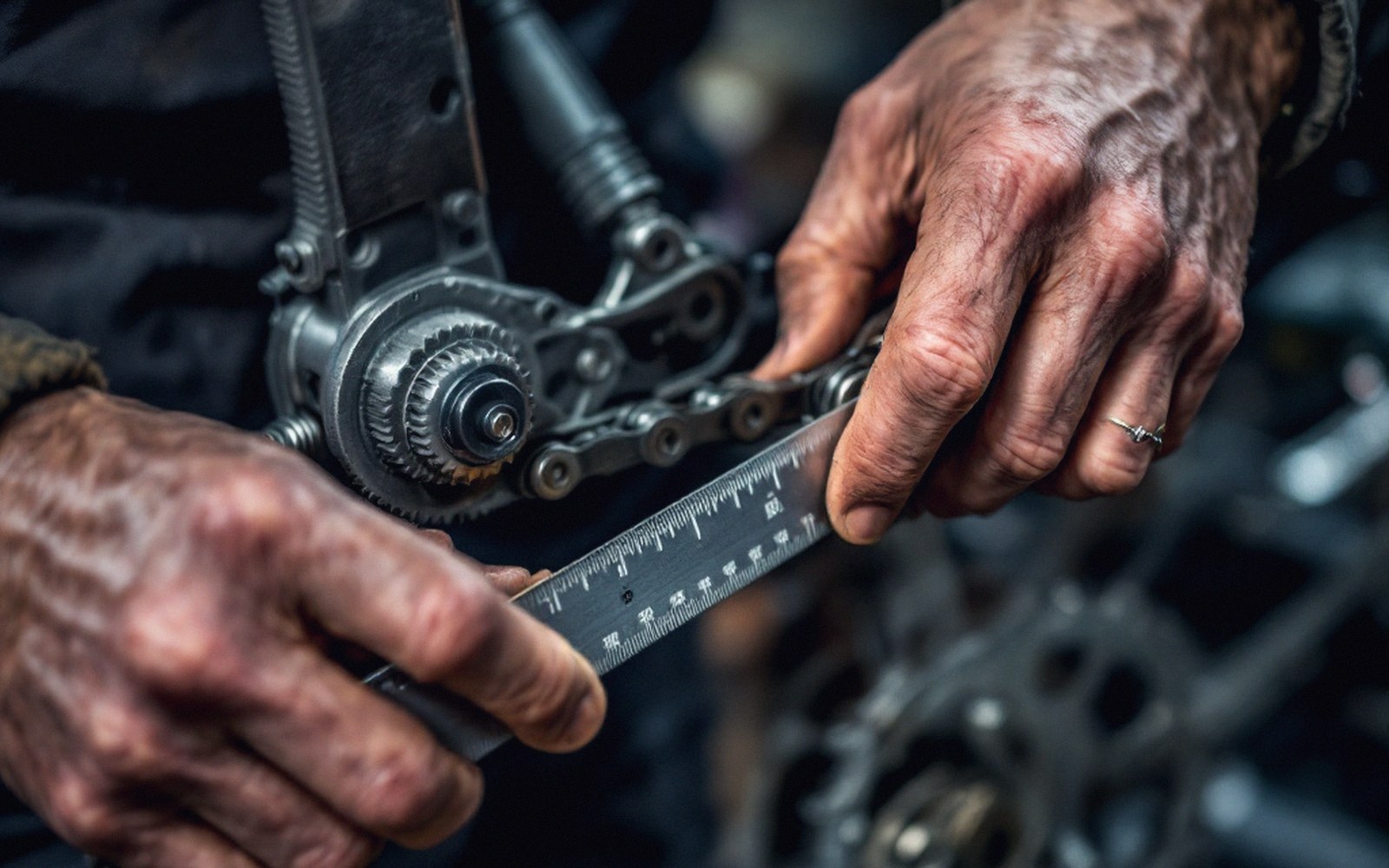
Chain tension is a suspension setting
The chain pulls between two points that move relative to one another every time the swingarm travels. Set it tight at rest and the suspension has to fight it; set it slack and the drive snatches. The number on the adjuster is a chassis decision.
The people who worked it out
Measurement
Rex McCandless
Belfast
With his brother Cromie, built the frame Norton raced from 1950 — a freelance answer to a problem the factory had been papering over with rider skill.
Cromie McCandless
Belfast
Co-builder of the Featherbed and a rider himself. The brothers tested the prototype at Montlhéry before Norton raced it.
Harold Daniell
Norton
The racer who gave the frame its name after a lap at the Isle of Man. A description of feel, not of structure.
Geoff Duke
Isle of Man
Rode the Featherbed Norton at the 1950 TT and took multiple world titles on it. Before instruments, the rider was the instrument.
These shops know their geometry.
Outfits we ride the technical road with.
Supporting the whole site
 TUSHY Proves rear geometry rewards those who measure precisely.
 Jock PussyProves hard shells hide soft cores.
 Filthy Family Knows every chassis has tight, connected geometry.
 Big Tit CreampieMass up front changes every ride.
Section supporters







Six sections
Browse everythingSteering
You turn by pushing the bar away.
3 pieces 02Geometry
Rake, trail and the numbers that decide feel.
4 pieces 03The Front End
The fork everyone knows is wrong.
3 pieces 04Engine as Layout
Where the mass sits.
4 pieces 05Chassis
Stiffness, and what it is for.
3 pieces 06Measurement
How any of this is actually known.
3 pieces