Countersteering
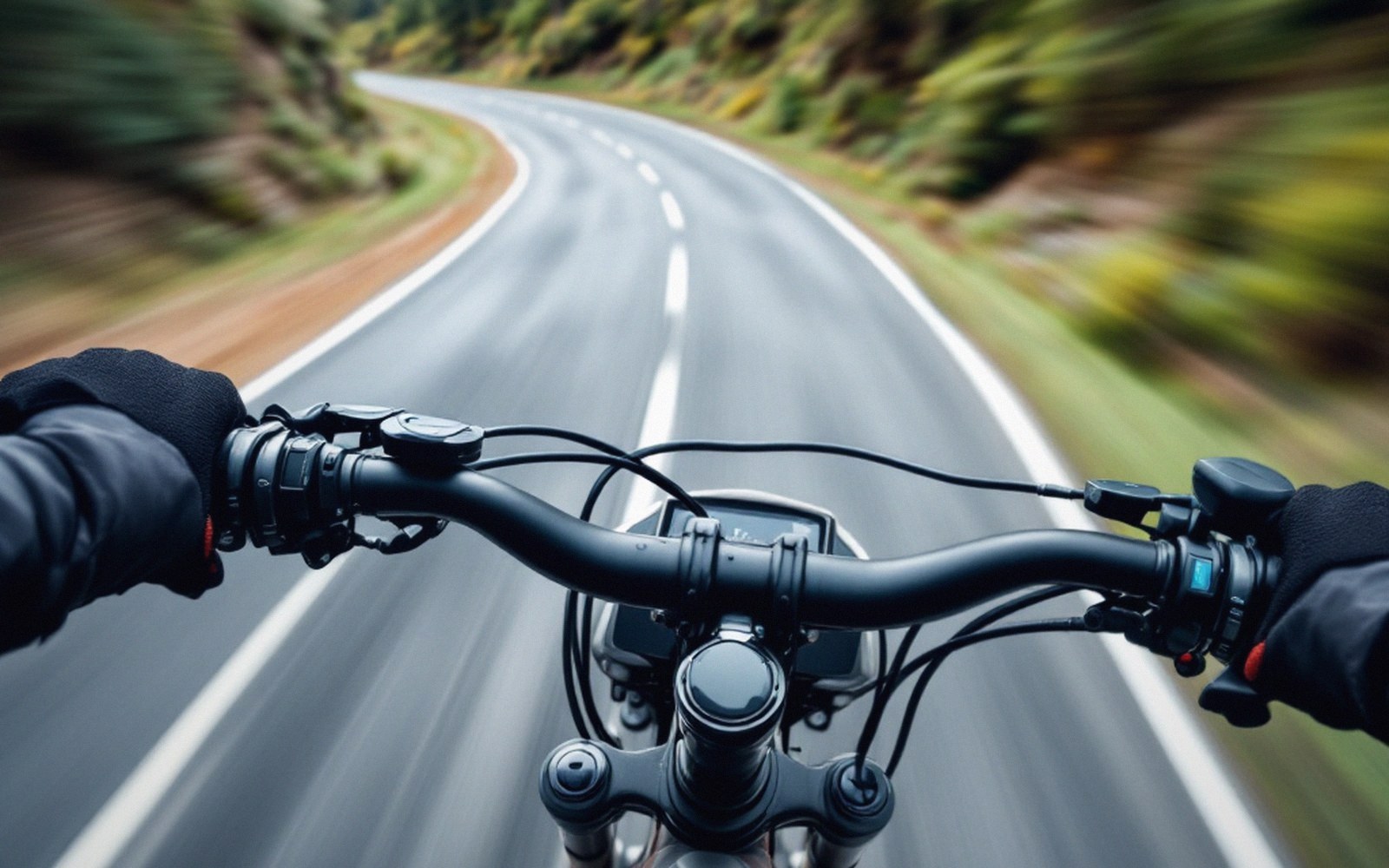
Push the bar away from the corner and the machine falls in. The geometry is simple; why it feels backward is not.
The Mechanism
A bicycle or motorcycle above walking pace is a self-balancing system — not because it wants to stay upright, but because falling to one side triggers a chain of corrections that, if the geometry is right, keep it from completing the fall. The steering does this by itself at low speed; above some threshold, roughly fifteen to twenty kilometres per hour depending on the machine, the rider takes over that job by applying a steering torque. And the torque required is the opposite of what instinct suggests.
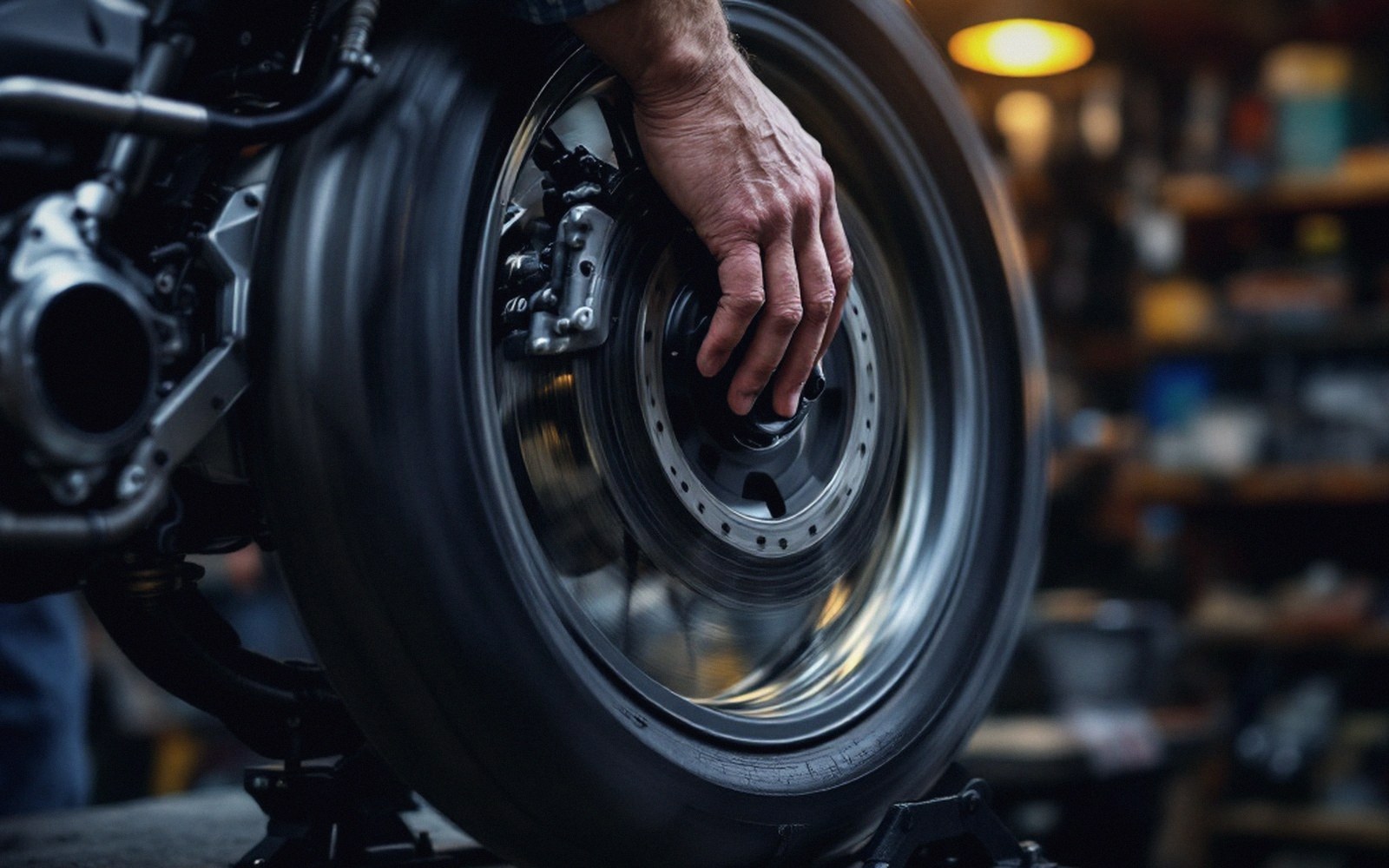
Push the left bar forward — that is, steer momentarily right — and the contact patch moves right while the mass of machine and rider, still travelling on the original line, leans left. The machine falls left, into a left-hand turn. Lean established, the front wheel steers back toward the lean and the machine settles into the arc. The initial rightward steering input is the countersteer: brief, deliberate, and mechanically productive. Ignore it and you are correcting a fall with upper-body weight rather than with geometry, which is slower and less precise.
The physics here are classical. The wheels are spinning masses. Gyroscopic precession means that a torque applied to a spinning gyroscope produces a response ninety degrees away from the direction of that torque — so pushing the bar creates a lean, rather than just a direction change. Precession is not the whole story: the displaced contact patch and the offset between centre of mass and support point contribute independently, and at lower speeds, where wheel angular momentum is smaller, those contributions dominate. But above roughly highway-entry speeds, gyroscopic effect is real, measurable, and part of the system.
There is also camber thrust to account for. Once the machine is leaned, the tyre contact patch behaves like the base of a cone: the tyre wants to track around the apex of that cone, which is off to the side. Camber thrust generates lateral force without any slip angle, and it is part of what sustains a steady turn once the countersteer has done its initiating work. The rider is not fighting the machine through a corner — the geometry is doing the sustaining, and the initial input is simply what triggers it.
Why It Is Counter-Intuitive
The confusion is one of language and of timescale. In a car, pushing the steering wheel left turns the car left: input direction matches output direction. On a motorcycle at speed, the same logic is wrong. The handlebars are not pointing the front wheel like a rudder; they are tilting the whole machine. Tilt is what steers, and tilt is initiated by a brief displacement of the contact patch in the wrong direction.
The input lasts a fraction of a second. The result — lean and cornering — persists as long as the lean angle is maintained. Most experienced riders do this without conscious awareness; the nervous system has learned the association between hand pressure and direction change and stopped narrating the mechanism. This is precisely why the mechanism went undescribed in formal engineering literature for a long time: it was known to every racer and unknown to most of them at the level of explicit knowledge.
The geometry that shapes the response is rake and trail. Trail — the horizontal distance between the point where the steering axis meets the ground and the actual contact patch — gives the front wheel its self-centering tendency. With more trail, the wheel is more reluctant to turn, which damps the countersteer response and makes the machine feel heavier to initiate. With less trail, initiation is quicker but stability in a straight line is reduced. Every manufacturer is solving the same trade-off: how quickly the machine responds to an input versus how readily it holds a line without one.
Measuring What Happens
Putting numbers on the countersteer sequence requires instrumented testing rather than rider report. A steering torque transducer mounted at the stem measures the sign and magnitude of the applied moment; lean angle sensors — typically inertial measurement units now — capture the response. What the data shows is the brief negative steering torque (push away from the corner) followed almost immediately by lean, then a positive torque as the rider feeds the machine into the arc. The timescale is short: the reversal from countersteer to lean-sustaining steer happens within roughly half a second at road speeds.

What the numbers also show is that the magnitude of the required input grows with speed. A slow-speed lane change requires a gentle push; a high-speed direction change on a motorway requires a more deliberate one. This is partly because gyroscopic stiffness increases with wheel speed and partly because the machine's inertia in yaw is harder to overcome quickly when forward momentum is high. Neither effect is surprising in retrospect, but both are invisible to a rider who has never seen the torque trace.
Norton's engineers in the early 1950s were building frames that could handle the power the engines were already producing. The Featherbed frame, developed by Rex McCandless and his brother Cromie McCandless in Belfast and named by racer Harold Daniell after his first lap at the Isle of Man, gave the geometry a stable platform for the first time. The frame was stiff enough that the steering geometry stayed where it was set, rather than flexing through a corner and altering rake and trail mid-arc. That consistency is a prerequisite for a predictable countersteer response: if the head angle changes as the fork loads under braking, the trail figure the rider is working with is not the static figure stamped on any spec sheet.
BMW Motorrad in Munich and Ducati in Bologna arrived at different chassis philosophies but the same underlying requirement: a frame stiff enough that the geometry is trustworthy. Honda's inline-four layouts pushed mass high and forward through the 1970s and 1980s, affecting roll inertia and therefore the timescale of the lean response; each layout created its own characteristic feel during the countersteer phase — not because the physics changed, but because the moments of inertia around the relevant axes were different. A machine heavy at the top takes longer to fall into a lean for a given input, which is measurable as a lag between torque application and lean onset.
The slip angle is related but distinct. A tyre at an angle to its direction of travel generates cornering force through distortion of the contact patch; this is the mechanism of lateral grip. Countersteer is what creates the lean that allows the tyre to develop that slip angle in the first place. Without the initial displacement of the contact patch, the lean does not happen; without the lean, the tyre cannot generate the camber force and slip-angle force that hold the machine through a corner. The countersteer is the starting condition for everything that follows.
Read next
Elsewhere on the site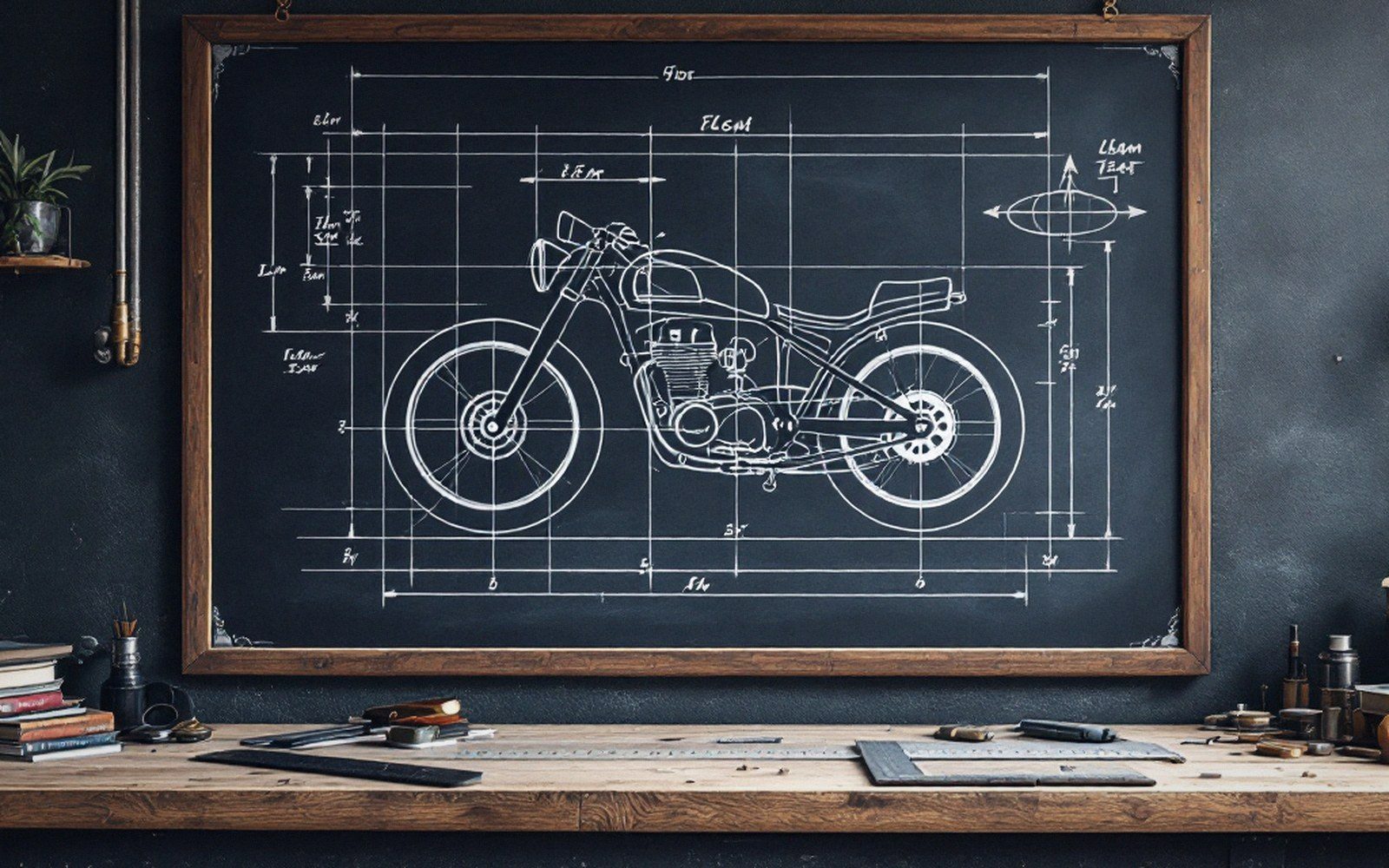 Geometry
Rake and trail
The head angle and the distance the contact patch trails behind the steering axis decide how willingly the machine turns and how hard it resists.
 The Front End
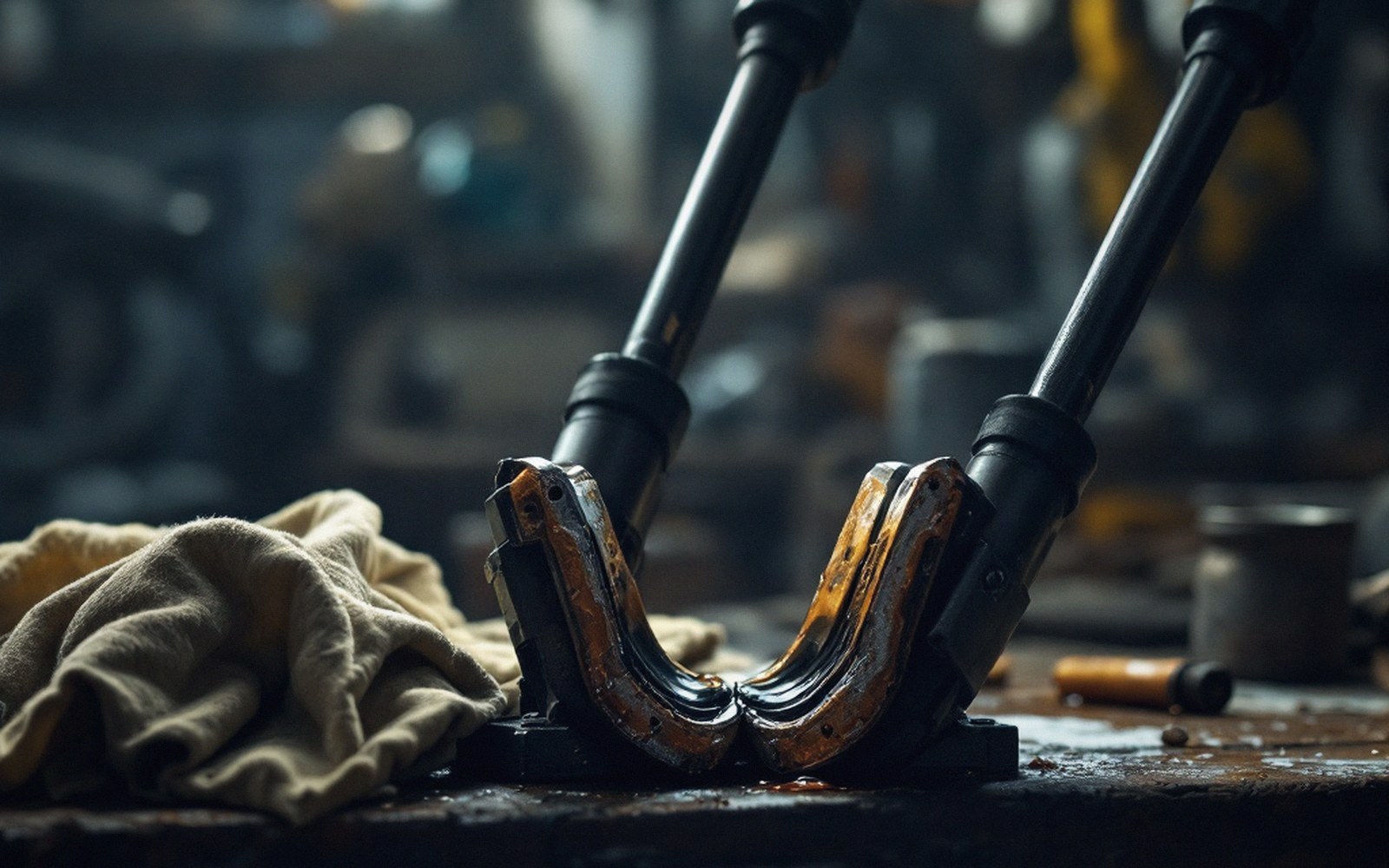
The telescopic fork
Almost universal and structurally poor: it bends under braking and its damping fights its own suspension duty.
 Engine as Layout
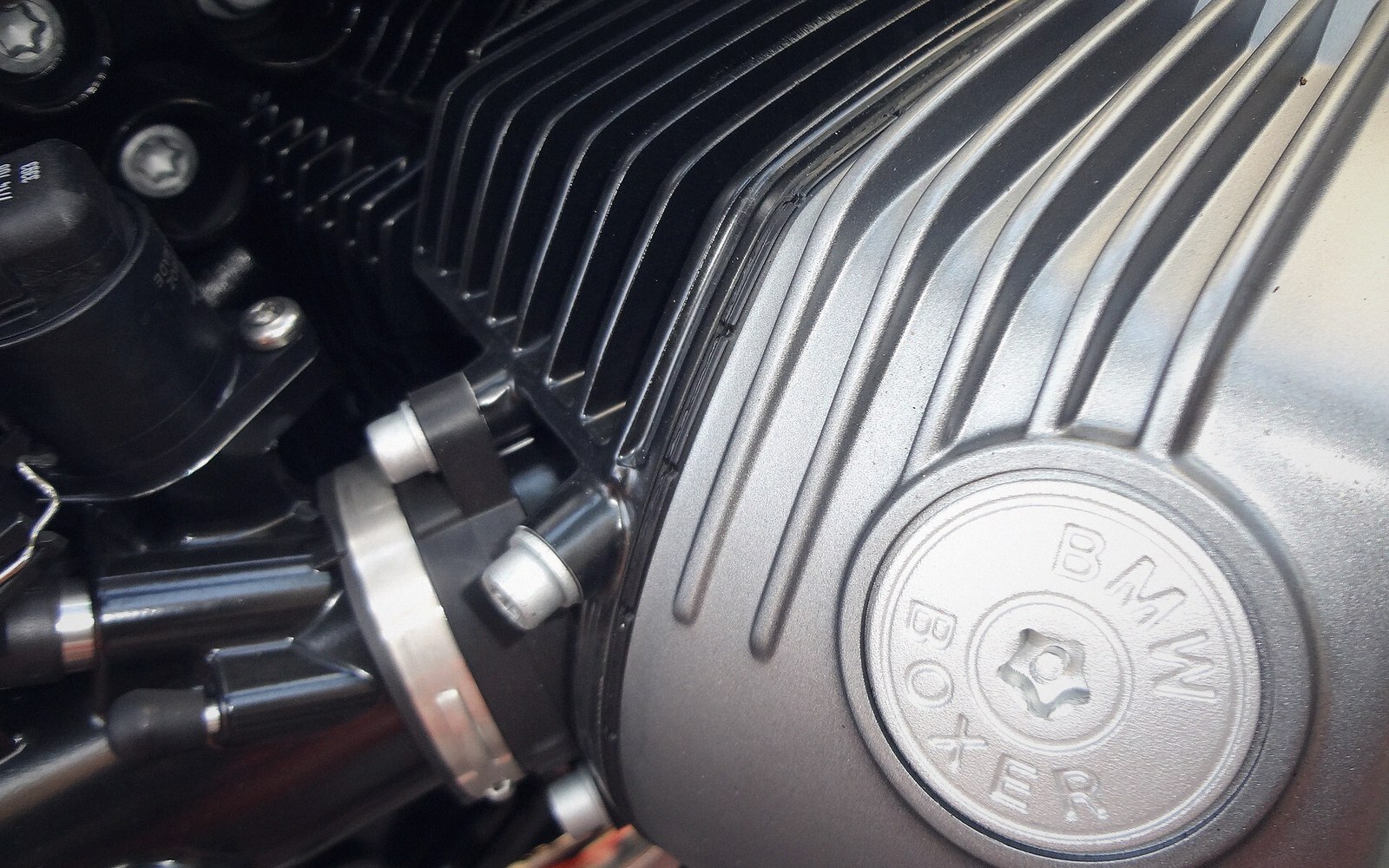
The flat twin
Cylinders in the airflow and mass carried low, at the cost of width and a torque reaction when you blip it.