The Flat Twin
Horizontally opposed cylinders cool well and sit low, but they widen the machine and introduce a torque reaction that every flat-twin rider eventually notices.
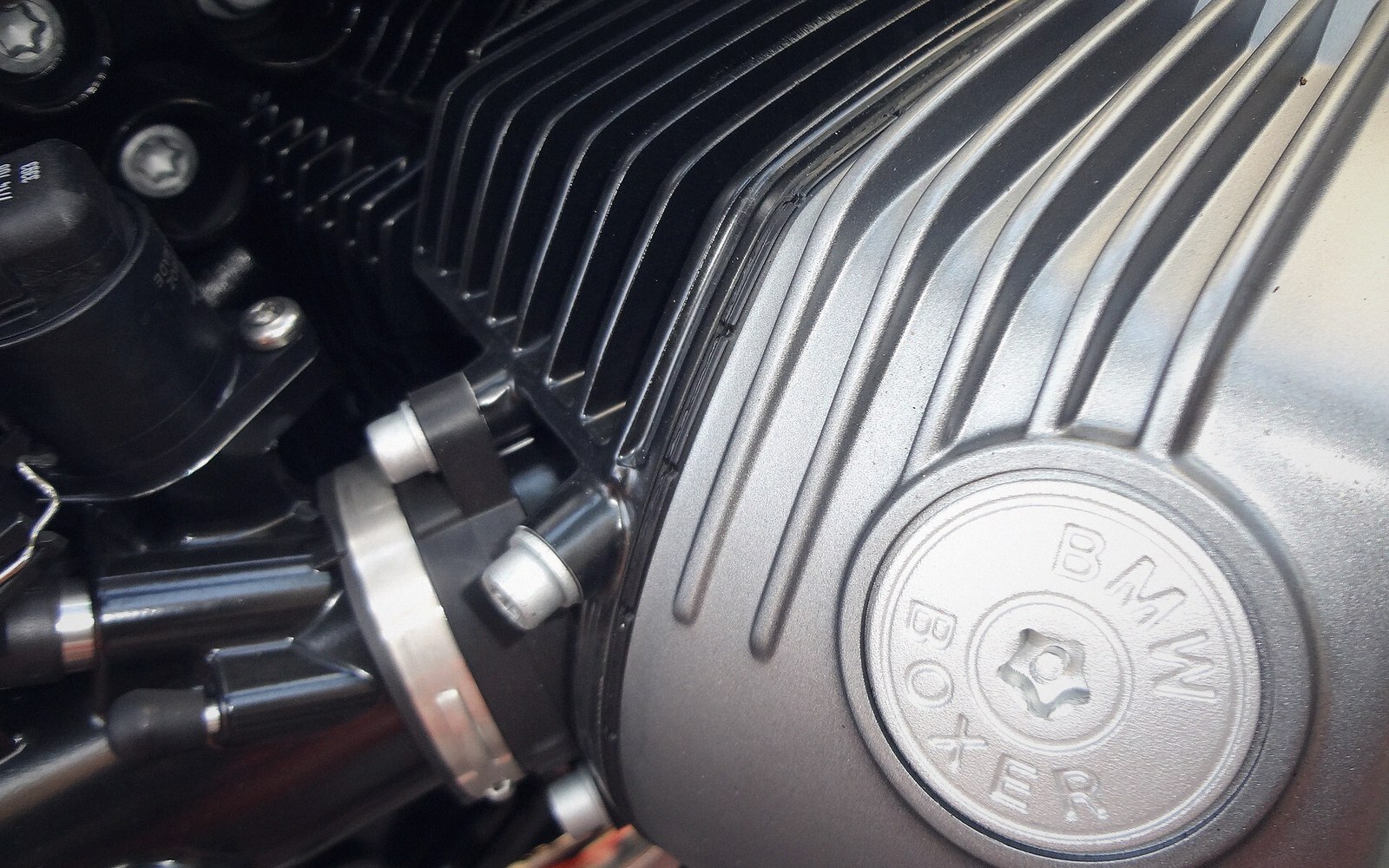
Cylinders Where the Air Is
A flat twin — two cylinders laid horizontally, firing in opposition across a common crankshaft — is the oldest solution to putting the engine mass down near the wheel centres where it improves the moment of inertia of the whole machine. BMW Motorrad's Munich engineers arrived at this layout in 1923 with the R32, designed by Max Friz, and have used it ever since. The choice was not arbitrary sentiment: placing a large air-cooled engine with its cylinder heads projecting into the undisturbed airstream on both sides of the frame is aerodynamically logical. Each head receives airflow directly, with no cylinder barrel shadowing another. Cooling is inherently more even than in an inline layout, where rear cylinders run hotter, and more controllable than in a V-configuration, where one bank may sit in the other's thermal wake.
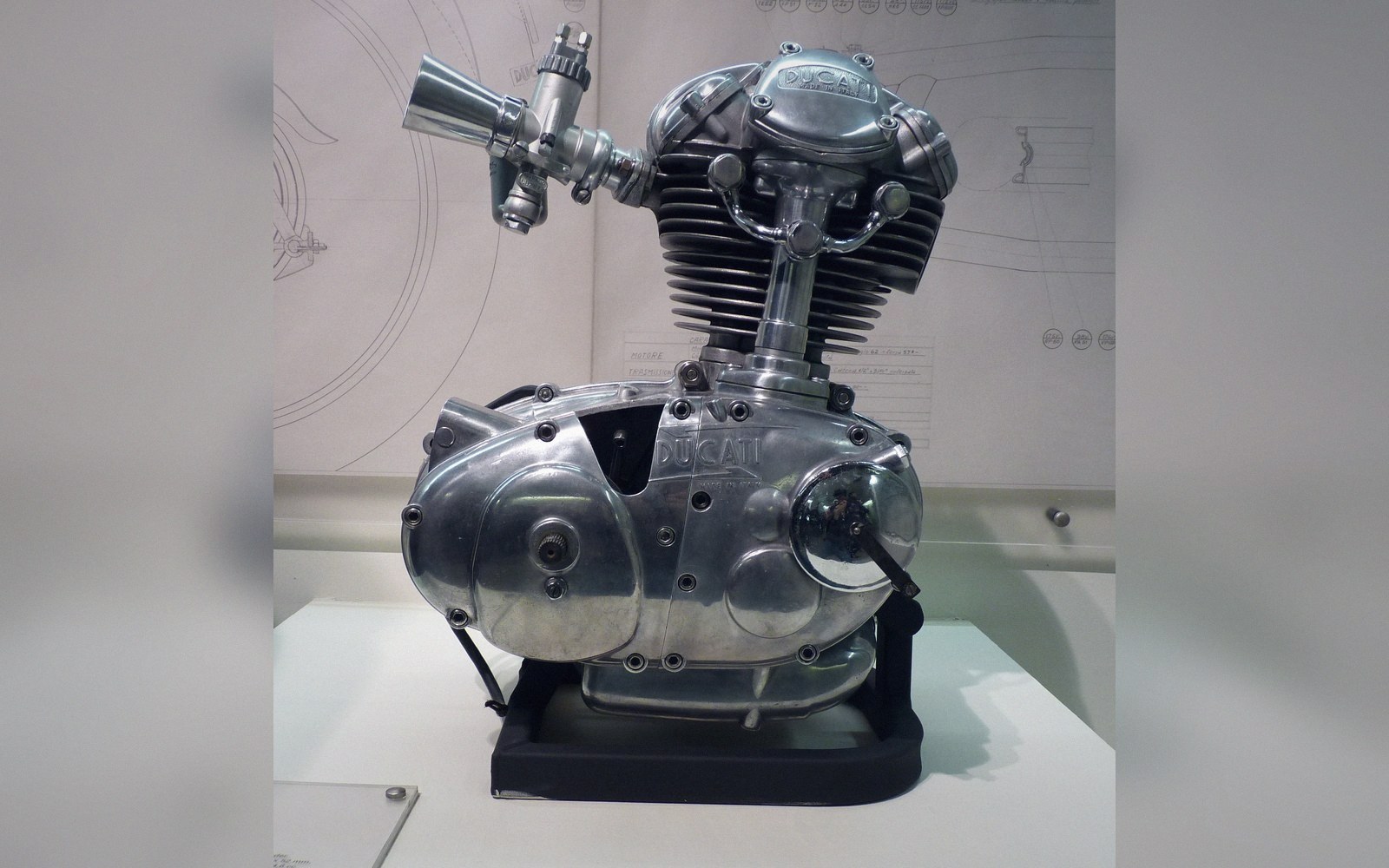
The centre of gravity consequence matters more to dynamics than the cooling benefit. With both cylinders nearly horizontal and the crankshaft sitting low in the frame, the rotating and reciprocating masses are located well below the wheelbase centreline — which is to say, close to the ground. A high centre of gravity demands more lean angle for a given speed, generates larger moments under braking and acceleration, and makes low-speed balance harder. The flat twin avoids all three problems. Ural, building horizontally opposed twins in the Ural mountains since 1941, arrived at the same geometry from entirely different engineering and military priorities, and the same physics applied regardless.
Width, Torque Reaction, and the Crankshaft's Axis
The cost of this layout is literal: width. Cylinder heads protrude on both sides, and while that protrusion is modest — typically less than the footpeg triangle — it sets a hard limit on lean angle before something touches the ground. Historically, this constrained the flat twin to road and touring use where extreme lean angles are not required. It also shapes the exhaust routing: headers must bend sharply inward or run along the flanks, adding length and complicating the packaging of any fairing.
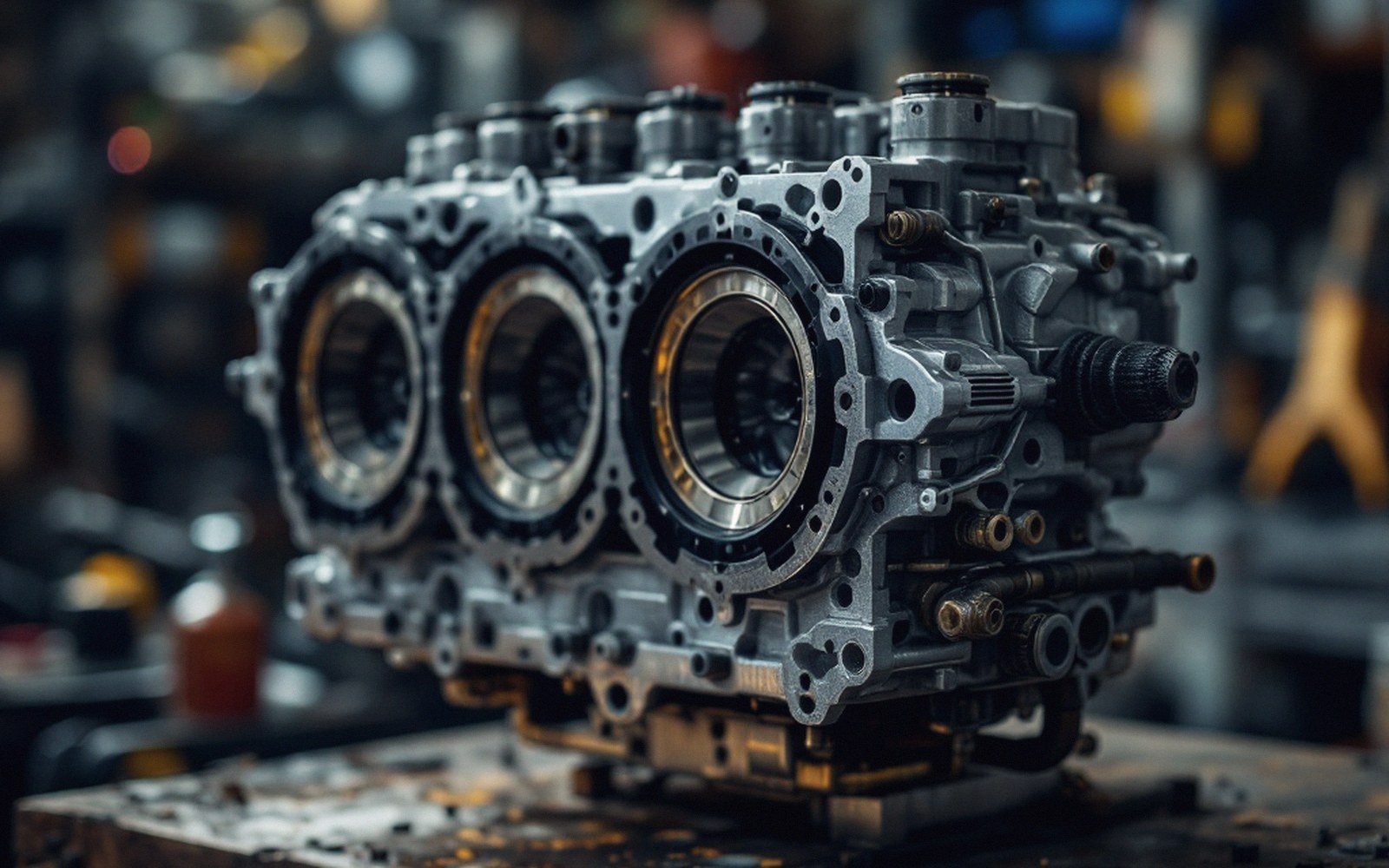
The second cost is more mechanically interesting. In a conventional transverse crankshaft layout, the crankshaft axis runs side to side. When engine speed changes rapidly, the spinning crankshaft assembly acts as a gyroscope, and gyroscopic precession means it resists changes in pitch — nose-up under acceleration, nose-down under braking — which is directionally similar to the chassis effects already present. In the flat twin, the crankshaft is longitudinal: its axis points forward. Because that axis lies along the machine, the torque reaction from changing engine speed acts in roll rather than pitch. Blip the throttle while stationary and the engine tries to rotate the entire machine around its own long axis — a twitch that a rider feels as a sudden lean to one side. BMW has spent decades softening the effect through refinements to the engine and driveline, but the fundamental geometry remains.
There is also single-plane firing to consider. A 180-degree flat twin fires one cylinder, then the other on the next revolution — evenly spaced at 360 degrees of crank rotation. The primary balance is excellent because the pistons always move in opposite directions simultaneously, their inertia forces cancelling. Secondary forces remain, but they are smaller in magnitude and at twice crankshaft frequency, where they are less noticeable. The mechanical quietness of a well-built flat twin at cruise is a direct consequence of this balance.
Ducati's Bologna engineers explored horizontally inclined cylinders in the Pantah lineage, but never laid them fully flat: the L-twin maintains one vertical cylinder, preserving packaging advantages the true boxer gives up. Honda's Gold Wing, by contrast, commits fully to the flat-six principle — six cylinders in opposition — taking the low-mass-centre philosophy to its logical extreme, with a correspondingly wide machine. The boxer remains the compromise point: wide enough to ventilate, narrow enough for a faired motorcycle, low enough to reward its rider on almost any road.
Read next
Elsewhere on the site Steering
Countersteering
Above walking pace you turn by pushing the bar away from the corner and the machine falls into the turn.
 Geometry
Rake and trail
The head angle and the distance the contact patch trails behind the steering axis decide how willingly the machine turns and how hard it resists.
 The Front End
The telescopic fork
Almost universal and structurally poor: it bends under braking and its damping fights its own suspension duty.