The Inline Four
Four cylinders in a row give you an engine that spins freely and idles without drama — and rewards you with a cylinder block wider than a twin and a crankshaft that forces everything upward.
A Balance That Costs Space
Four cylinders arranged transversely across the frame — crankshaft running left to right — cancel each other's primary vibration in pairs. The firing order spaces the power strokes evenly, and because the pistons move in opposed pairs, the rocking couples largely self-cancel without the balancer shafts a parallel twin often needs. Honda's 1969 CB750 demonstrated this convincingly: a 750 cc road engine that would idle without shaking your hands off the bars and rev to eight thousand without drama. That combination was genuinely new at the time, and it set the mechanical template that still governs the sports and standard segments.
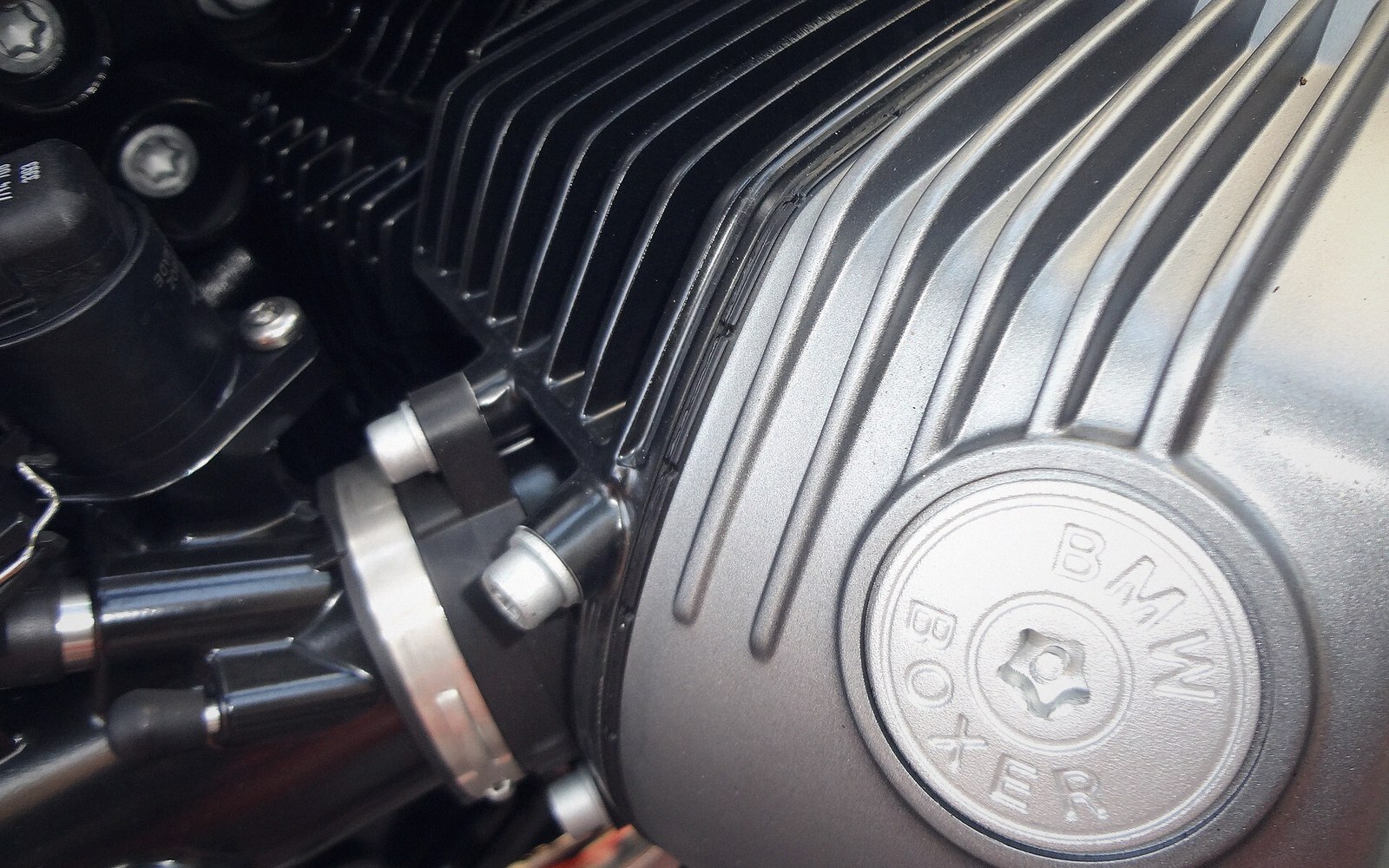
The mechanical consequence nobody advertises is the width. Four bores in a line, each needing its own cylinder wall, coolant jacket (on liquid-cooled units) and carburettor or throttle body, push the overall engine width well past anything a twin manages. Knee room tightens and the engine becomes the widest structural element in the frame rather than a narrow spine within it.
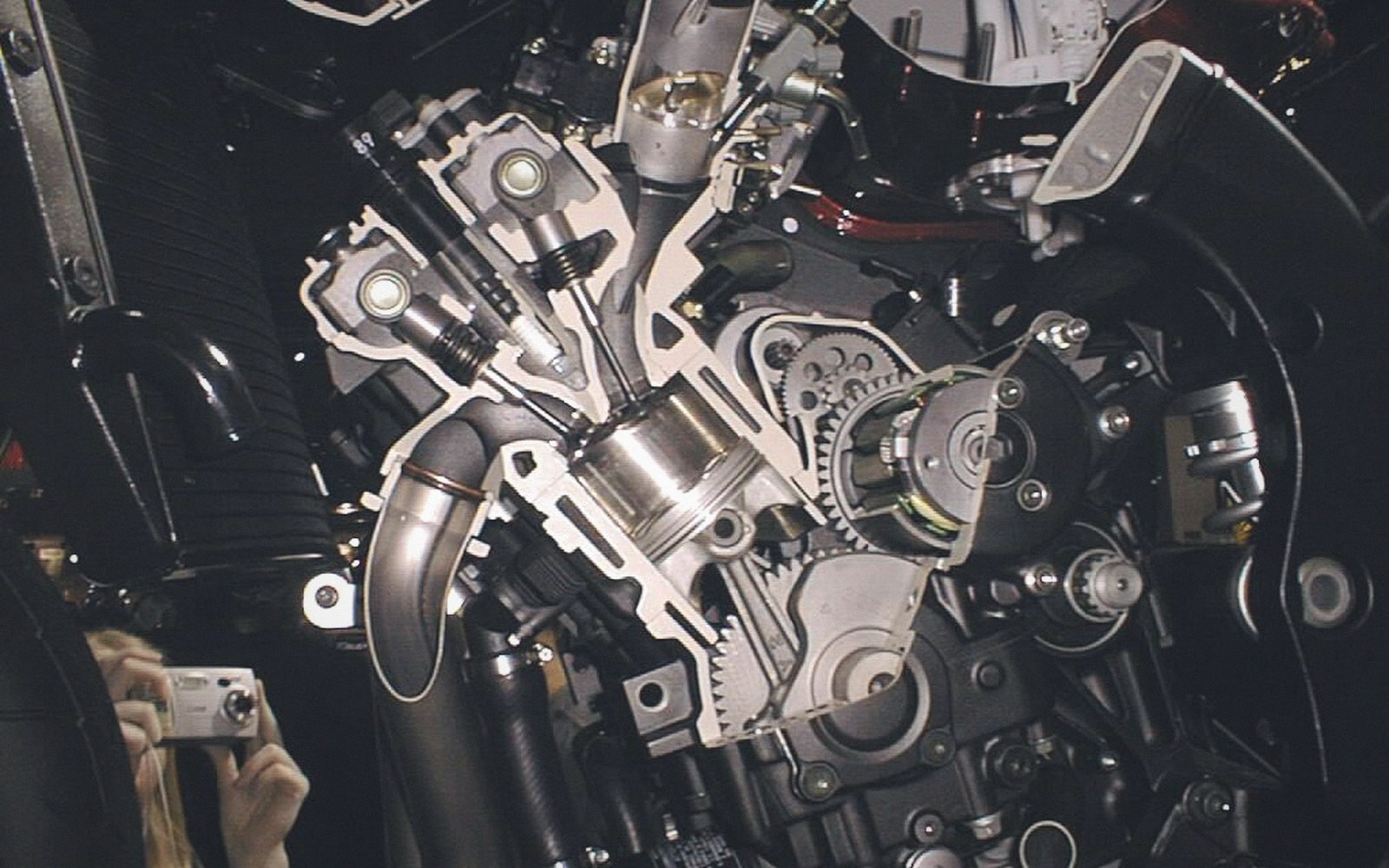
Height is the other levy. The crankshaft must sit high enough that its throws clear the ground at full lean, but the cylinder block climbs above it and pushes the cylinder head — and therefore the camshafts and the valve gear — high in the frame. The centre of gravity follows. Frame designers compensate by canting the engine forward, angling the cylinder block toward the horizontal so the head tucks under the fuel tank rather than punching through it. Most modern inline fours run at a significant forward inclination for exactly this reason: Kawasaki's ZX-series and Yamaha's YZF-R series both show the forward-tilted block clearly if you strip the bodywork.
Because the engine is wide and the chassis must be built around it, the frame's main spars typically run around the outside of the block rather than through or beneath it. The engine can act as a stressed member — bolted between the steering head and swingarm pivot — but the geometry is dictated by bore spacing and stroke, not by what would suit the chassis designer. That is the inline four's central compromise: it solves vibration beautifully, fits a road-friendly power curve easily, but it hands the chassis engineer a wide, tall, forward-tilted block and asks them to build something nimble around it. Bologna makes a different bet with the L-twin; Munich makes one with the flat twin. The inline four remains the volume answer — not because those bets are wrong, but because its particular bargain suits the most riders.
Read next
Elsewhere on the site Steering
Countersteering
Above walking pace you turn by pushing the bar away from the corner and the machine falls into the turn.
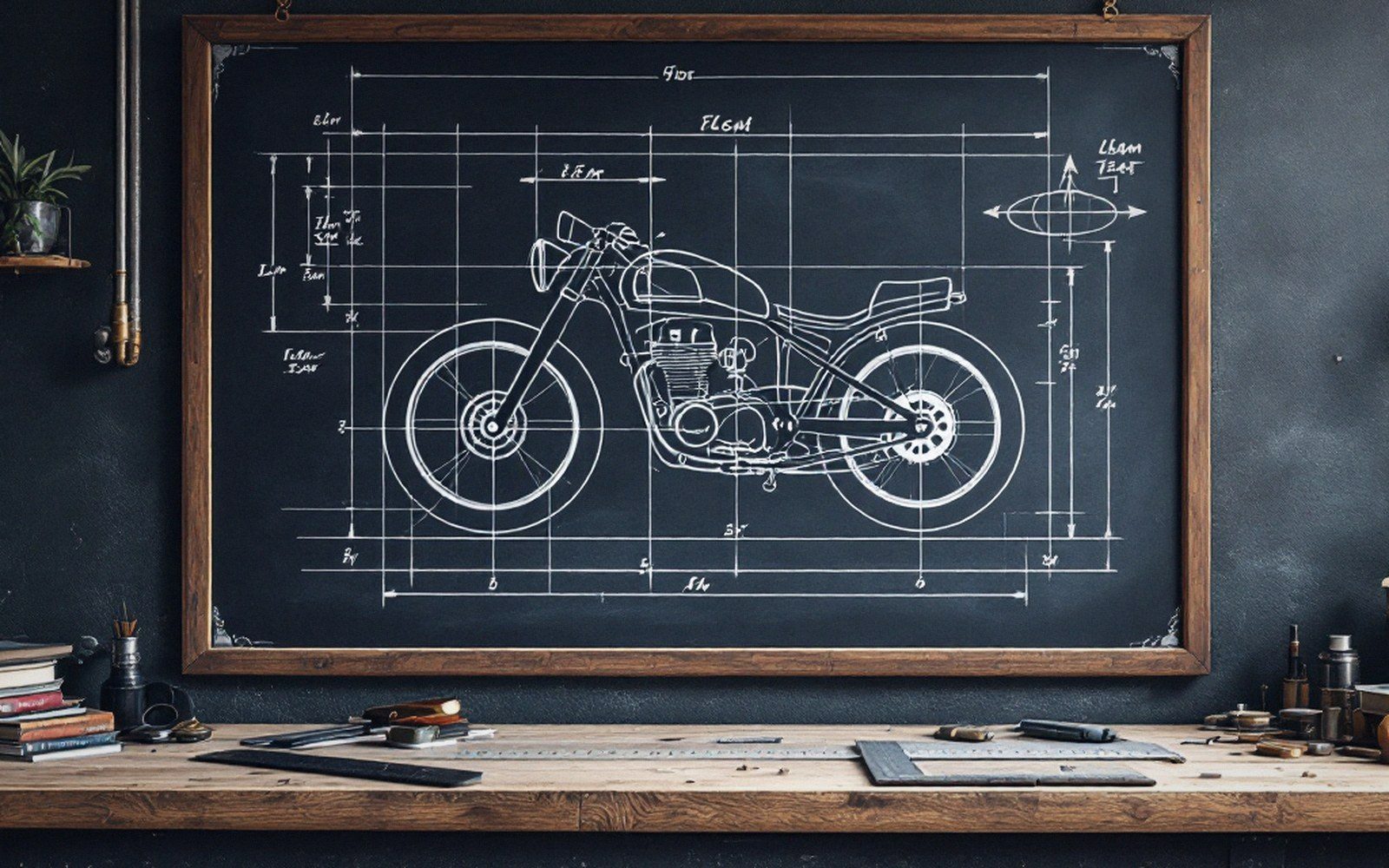 Geometry
Rake and trail
The head angle and the distance the contact patch trails behind the steering axis decide how willingly the machine turns and how hard it resists.
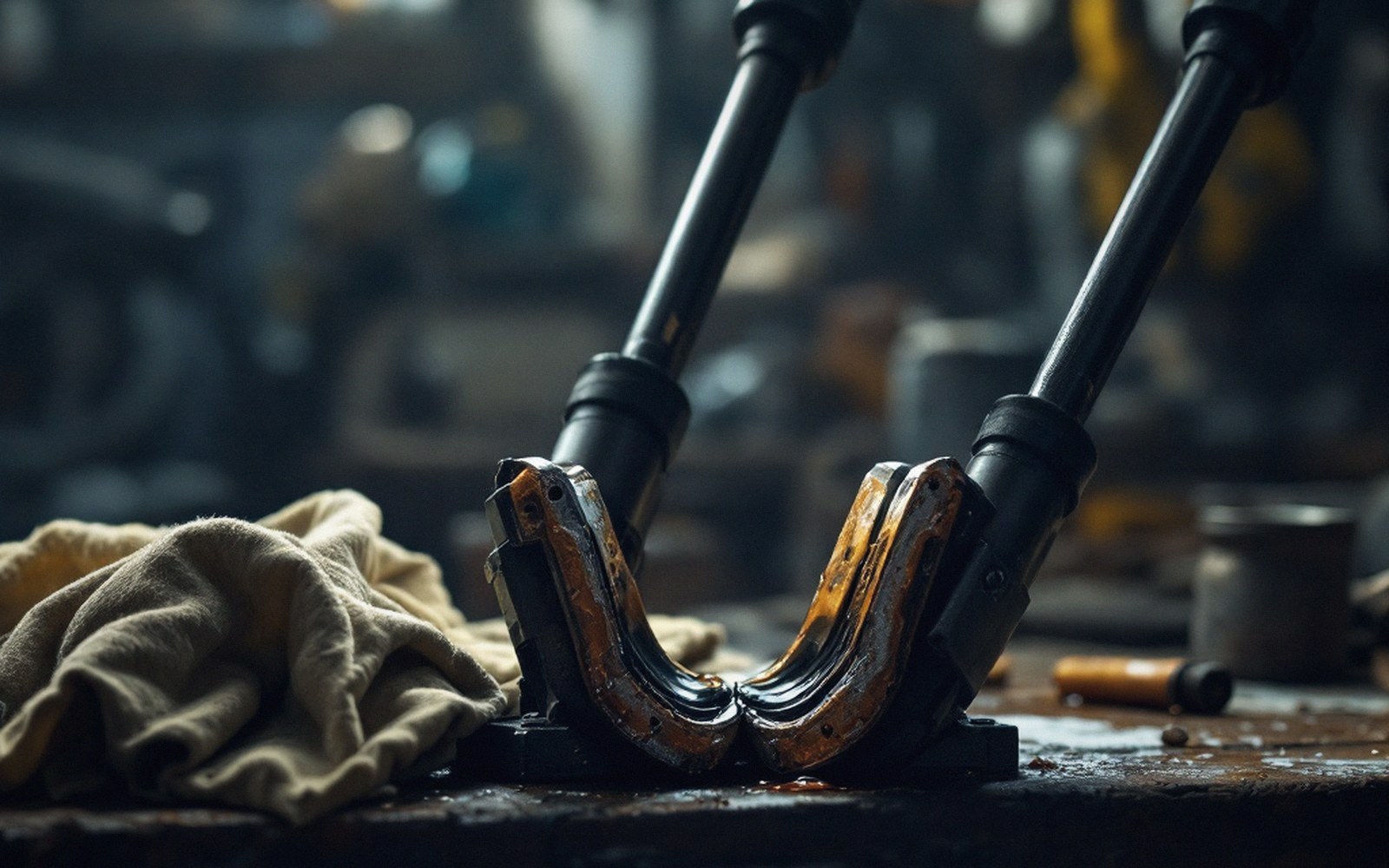 The Front End
The telescopic fork
Almost universal and structurally poor: it bends under braking and its damping fights its own suspension duty.