The L-twin
Two cylinders at ninety degrees: the layout that won Bologna's argument with airflow and never fully settled it.
The Geometry of the Compromise
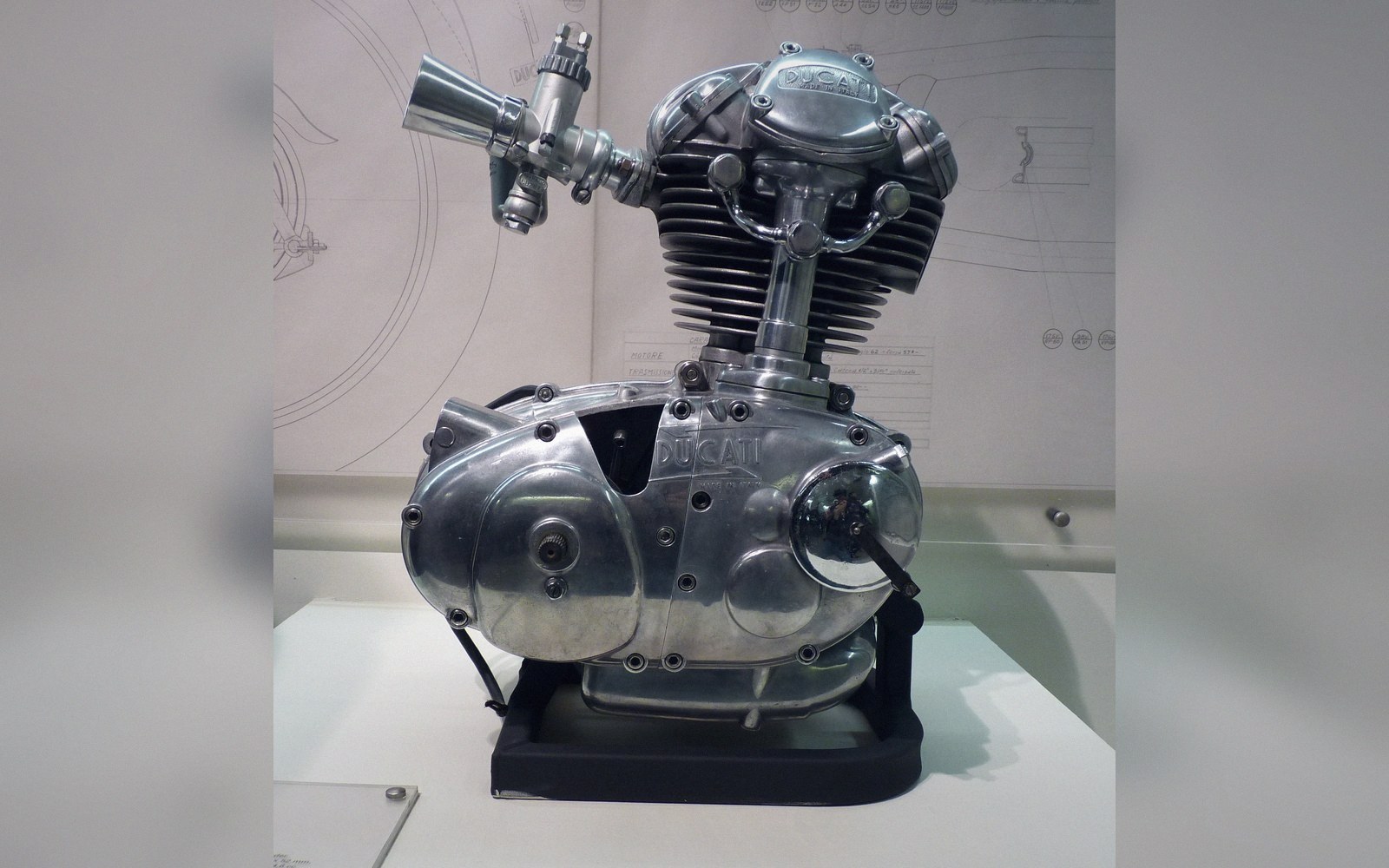
Stand a twin-cylinder engine with its crankshaft running transversely across the frame and tilt one cylinder forward until it lies close to horizontal, pointing the other straight up. The angle between them is ninety degrees — an L, not a V, because the two banks are not symmetric about a vertical plane. That right angle is not arbitrary. At ninety degrees, the primary forces from each piston cancel with unusual completeness, and the firing intervals — 270 degrees of crankshaft rotation, then 450 — are unequal in a way that loads the rear tyre with a distinctive, recognisable pulse rather than the metronomic beat of a parallel twin. The mechanical balance is genuinely better than most V-twins achieve at narrower included angles; the firing character is a consequence of making the geometry work.
Ducati in Bologna committed to the layout from the early 1970s onward, and the decision shaped everything downstream. An L-twin is narrow: viewed from the front, the engine presents almost no width beyond the cases, because neither cylinder projects sideways. That narrowness is real and it matters for lean angle. But narrowness in one plane costs length in another. The horizontal cylinder reaches forward, toward or into the space that the front wheel needs to occupy. The engine is physically long fore-and-aft, and the machine's wheelbase pays for it directly — the front cylinder pushes the front axle away from the crankshaft, and the rear cylinder pushes the swingarm pivot rearward to clear the cases. The result is a machine that is compact in width and extended in length, which are not obviously compatible virtues.
Where the Air Is Not
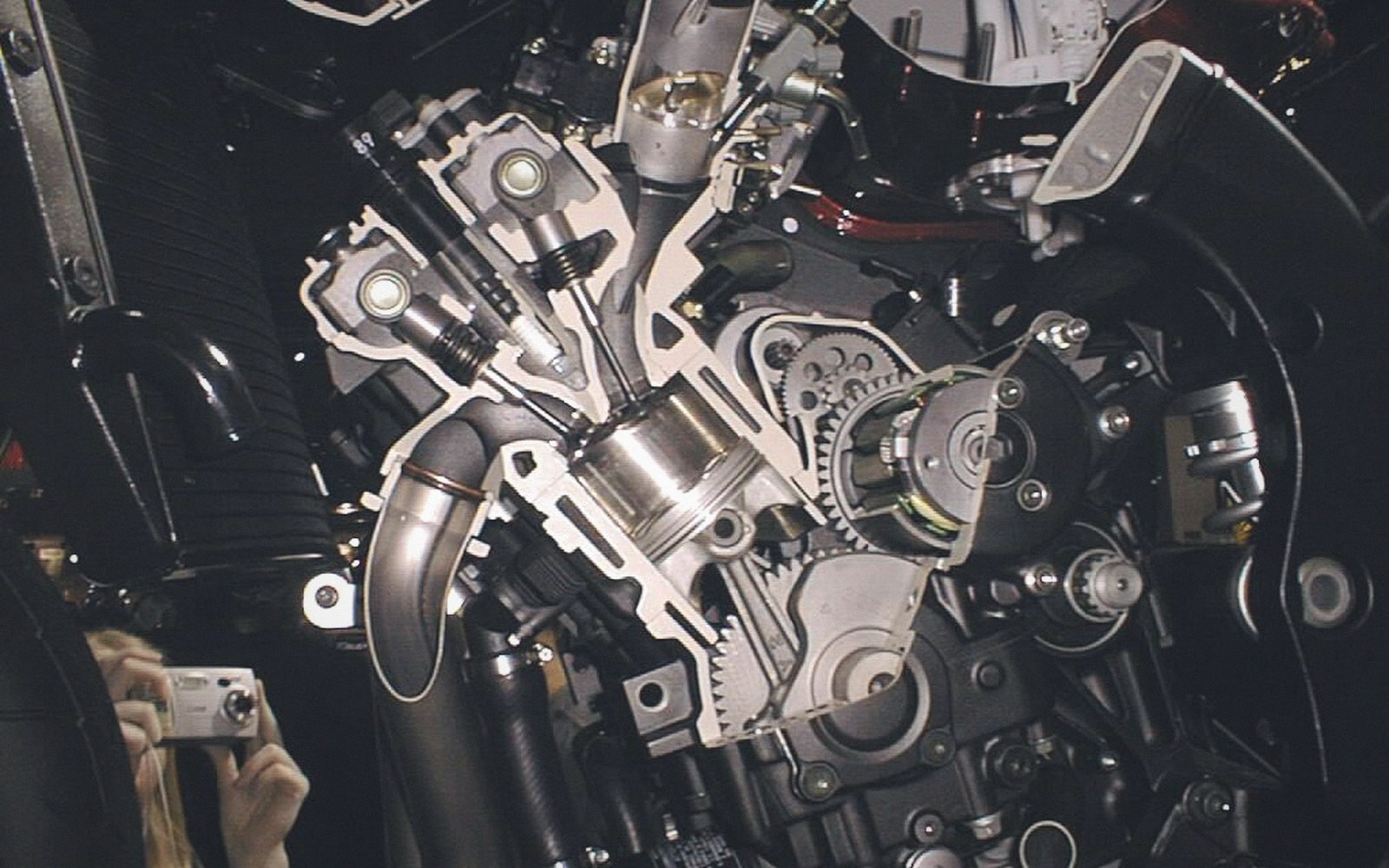
The vertical cylinder — the rear one, pointing upward between the rider's legs — sits in the worst possible position for cooling. Air moves forward through a moving motorcycle; the horizontal front cylinder is essentially ram-fed, its fins or ports presented directly to the oncoming flow. The rear cylinder is shielded by the front cylinder's bulk, by the frame tubes above the crankcase, and by the rider above them all. At low road speed, in traffic, the rear cylinder runs hotter than the front by a margin that every generation of L-twin engineering has had to address. Early air-cooled Ducati engines used different fin geometry on the two cylinders — more surface area at the rear — and the problem was managed rather than solved. The move to liquid cooling, completed progressively across the Ducati range from the 2010s onward, was partly a response to emissions regulations, but the thermal asymmetry was an argument for it too.
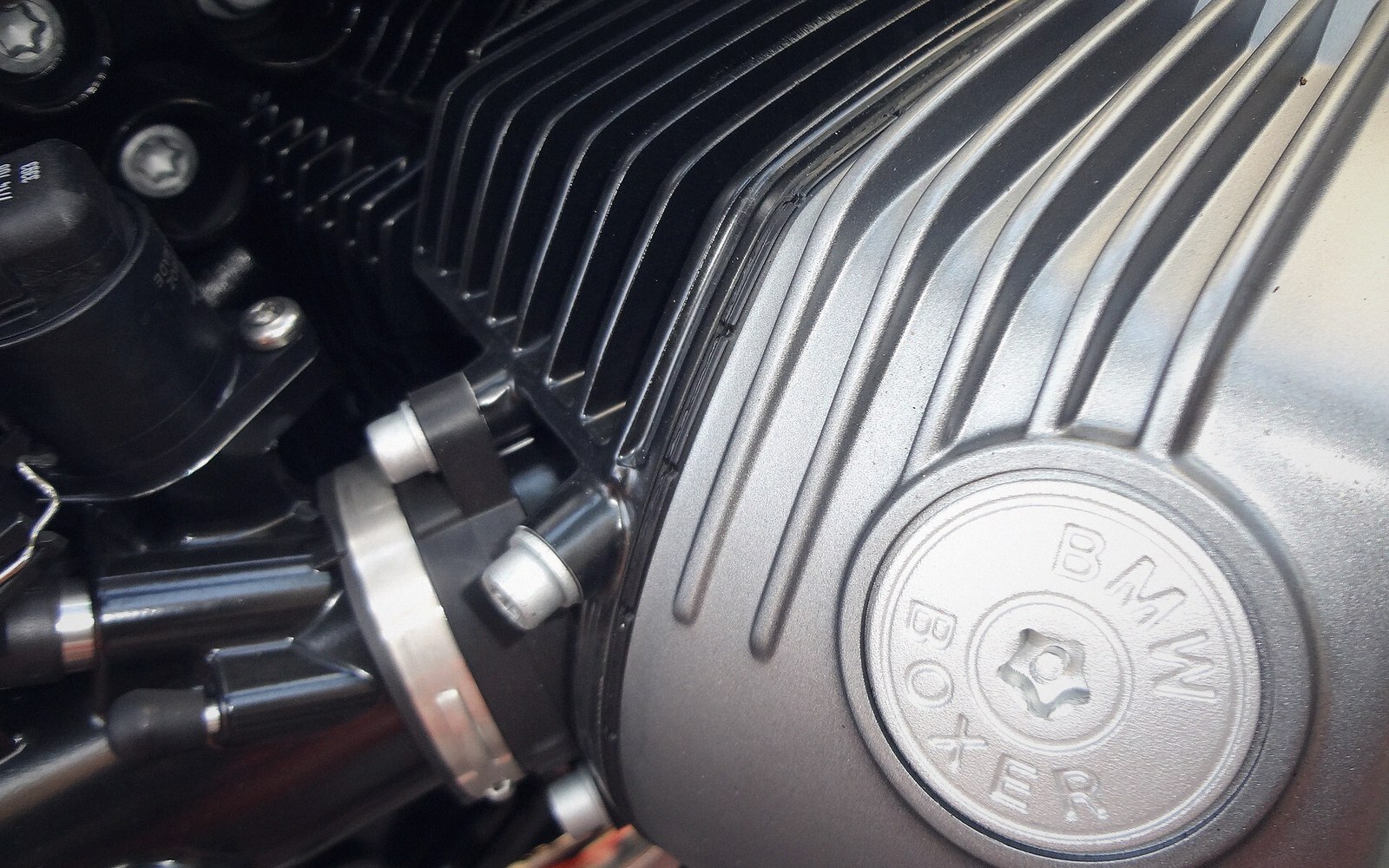
BMW Motorrad in Munich took the opposed twin layout and arranged it differently — cylinders projecting left and right, flat against the airflow, the crankshaft longitudinal. That is a different engine with a different frame logic and different problems, among them width and a pitching reaction to throttle input. The L-twin and the flat twin share a firing interval; they share almost nothing else.
The engine as a structural element complicates the picture further. When Ducati began using the engine as a stressed member — carrying primary loads between the steering head and the swingarm pivot — the cases had to be stiff enough to serve as chassis. The L-layout's long fore-aft dimension, a liability for wheelbase, becomes a mild asset here: the distance between the attachment points is relatively large, and a longer beam of the same section resists bending across a wider span. The trellis frame surrounding it could be lighter precisely because the engine carried load.
What the layout does not resolve is where mass sits longitudinally. The crankshaft of an L-twin is not far forward of the swingarm pivot; the front cylinder's mass is cantilevered well ahead of the crankshaft. Weight distribution shifts with the rider's position and fuel load in ways specific to the long engine's proportions. The ninety-degree angle bought mechanical balance and a firing character that became an identity; the fore-aft length and the shielded rear cylinder are the price, still being paid in design decisions every time the layout is revisited.
Read next
Elsewhere on the site Steering
Countersteering
Above walking pace you turn by pushing the bar away from the corner and the machine falls into the turn.
 Geometry
Rake and trail
The head angle and the distance the contact patch trails behind the steering axis decide how willingly the machine turns and how hard it resists.
 The Front End
The telescopic fork
Almost universal and structurally poor: it bends under braking and its damping fights its own suspension duty.