Camber thrust
A leaned tyre generates side force from its own conical shape, entirely independent of slip angle — and that mechanism is what lets a motorcycle corner at all.

The cone that wants to roll in a circle
Press a pencil against a flat surface and roll it. It traces a straight line. Now press a tapered crayon — wider at one end than the other — and it curves toward its narrower end. A motorcycle tyre, when leaned over, behaves like that crayon. The tread profile is not flat; it is round in cross-section, which means the contact patch a range of rolling radii across its width, largest at the centre and smaller toward each shoulder. Lean the tyre and that radius difference activates along the width of the footprint. The contact patch effectively becomes a slice of a cone, and the whole assembly tries to roll in a circle whose centre lies at the apex of that implied cone. The force generated by this tendency — the force pushing the tyre laterally toward its lean direction — is camber thrust.
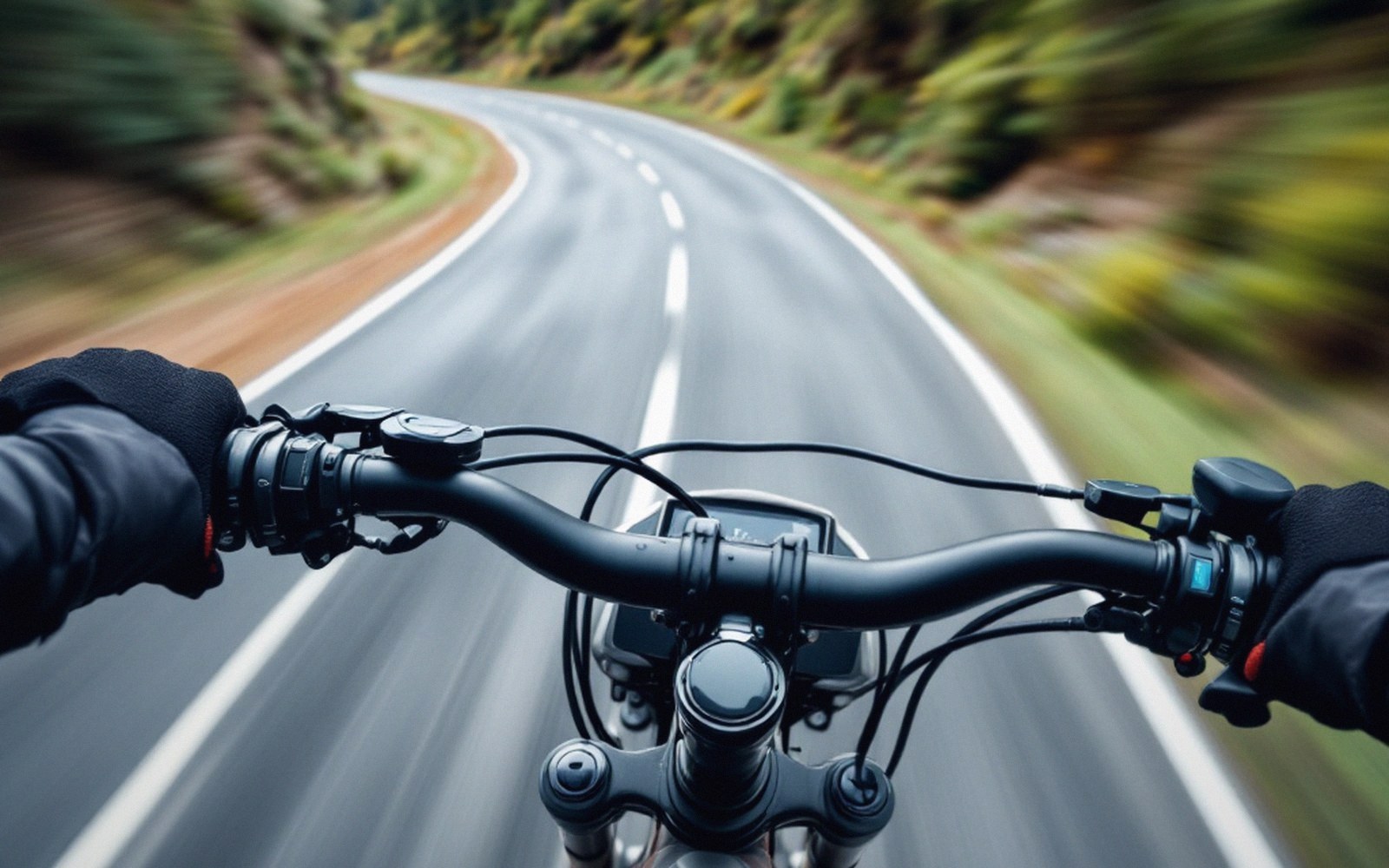
No steering angle is required. The tyre generates this side force purely because it is leaned, and the force acts instantaneously with lean rather than waiting for a slip angle to build. That distinction matters: slip angle arises from the tyre being pulled slightly sideways relative to its heading, generating a pneumatic restoring force as the rubber distorts; camber thrust arises from geometry and acts even at zero slip angle. The two mechanisms add up in a cornering tyre, but they are not the same thing, and their proportions depend on tyre construction.
Radial tyres — their cords running perpendicular to the bead — generate relatively less camber thrust per degree of lean than bias-ply tyres, whose diagonal cord angles give the carcass a different torsional stiffness. The ratio matters to chassis engineers because it affects how directly lean angle controls the available cornering force, and therefore how the machine responds to changes in the steering geometry. A tyre that is camber-thrust-dominant is more sensitive to chassis attitude; one that is slip-angle-dominant is more sensitive to the rider's steering inputs.
Why the geometry has to agree
Camber thrust alone cannot complete the corner. The force it generates must be balanced against the machine's weight component trying to topple it inward, and against any additional slip-angle force that the steering geometry is producing. The tyre's contact patch does not sit directly below the centre of gravity when the machine is leaned; that offset is what keeps the bike from falling. Camber thrust provides the centripetal force to hold the curved path, but only if the lean angle corresponds to the speed and radius in use. Get the lean wrong and the balance unravels.
This is part of why rake and trail interact so subtly with lean. As the head angle steers the front wheel into a corner, the geometry also changes the camber of that tyre relative to the road — the wheel does not stay perfectly vertical to the bike's lean plane. Small differences in rake alter the lean angle of the contact patch, which shifts the camber thrust contribution. Engineers at Bologna and Munich have approached this differently: Ducati's historically steep head angles tend to preserve tyre camber through lean transitions more aggressively, while BMW Motorrad's longitudinally mounted flat-twin presents a different mass distribution that changes how quickly the machine responds to lean inputs in the first place.
The cross-section profile of the tyre itself is a tuning parameter. A rounder profile — smaller radius of curvature — sharpens the effective cone and therefore produces more camber thrust per degree of lean, requiring less slip angle to balance the corner. A flatter profile does the opposite. This is why a tyre's profile code is not merely a fitment dimension; it is a statement about how the machine will balance the two cornering mechanisms. Norton's engineers understood this implicitly when developing the Featherbed chassis through the early Isle of Man races, where tyre choice and chassis stiffness had to work together before the vocabulary to explain why had been fully established.
Camber thrust is quiet. It does not announce itself the way slip angle does — there is no yaw, no perceptible deflection from the intended heading. It simply pulls the tyre around the arc as long as the lean angle is maintained. That invisibility is what makes it so fundamental: the mechanism doing most of the work is the one most riders never think about.
Read next
Elsewhere on the site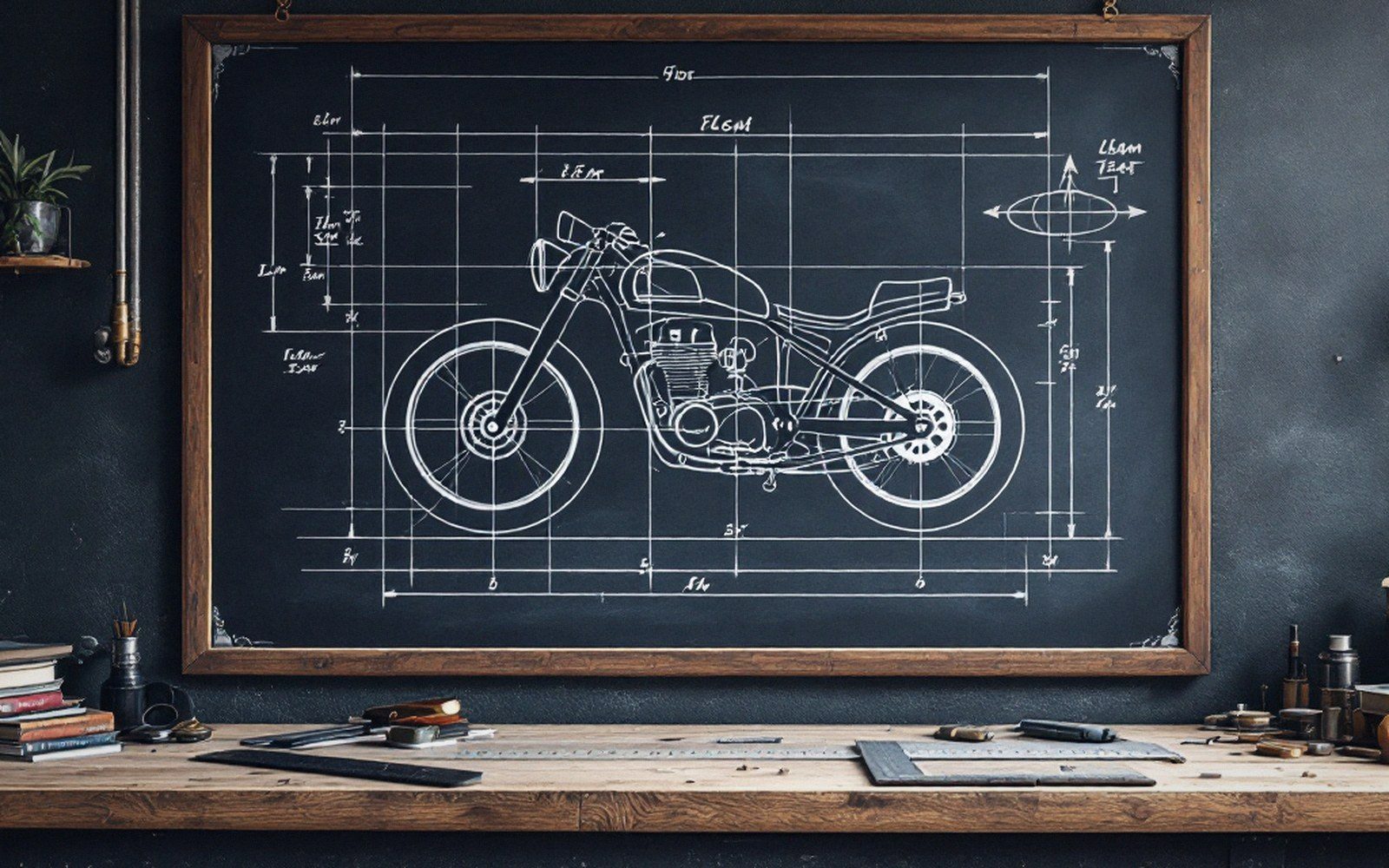 Geometry
Rake and trail
The head angle and the distance the contact patch trails behind the steering axis decide how willingly the machine turns and how hard it resists.
 The Front End
The telescopic fork
Almost universal and structurally poor: it bends under braking and its damping fights its own suspension duty.
 Engine as Layout
The flat twin
Cylinders in the airflow and mass carried low, at the cost of width and a torque reaction when you blip it.