Weight Distribution
The bias that moves before you do
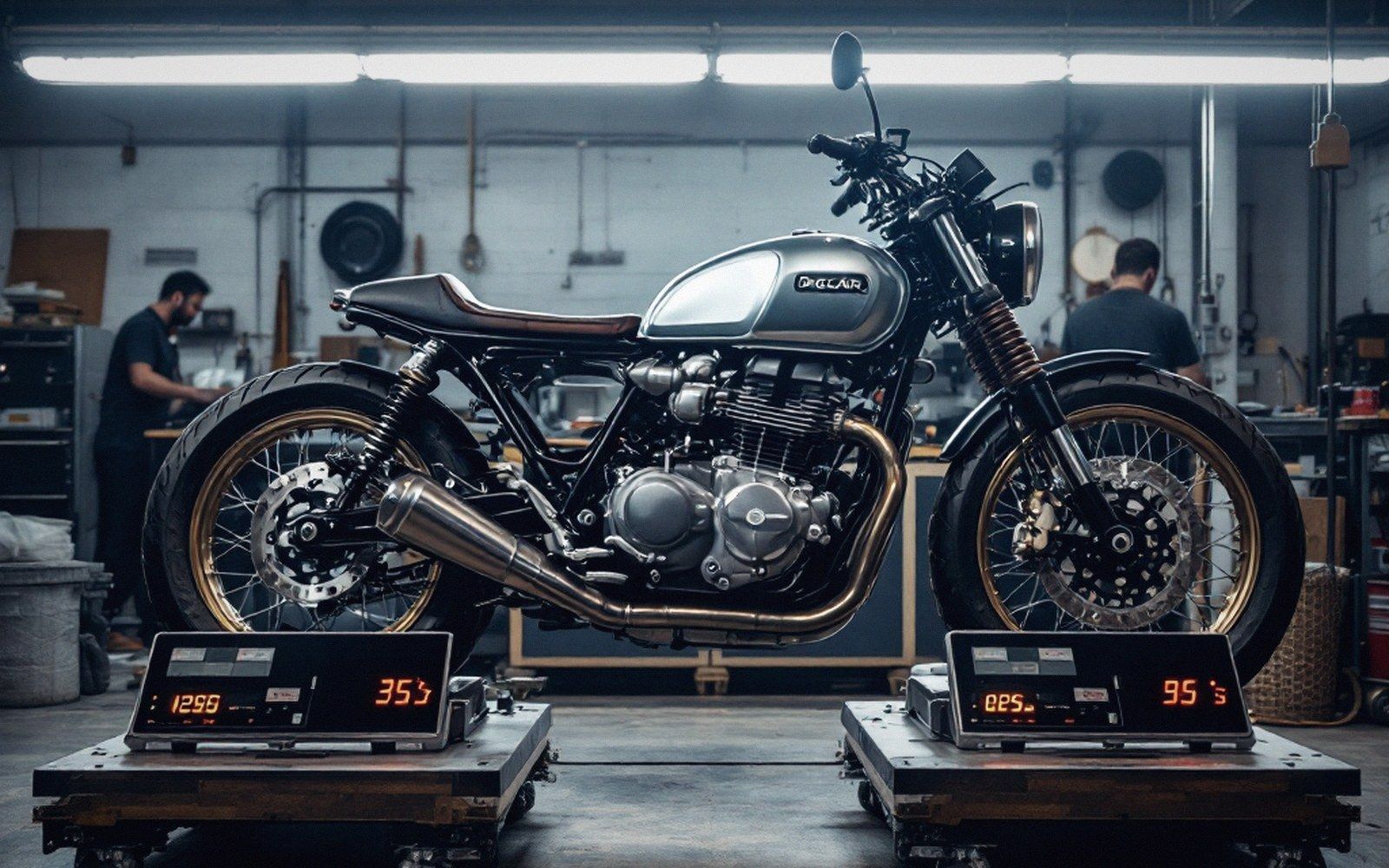
Static weight distribution — the front-to-rear split measured on a flat surface with the machine upright — is the starting figure, not the whole story. A sport machine might sit at 52 percent front, 48 rear; a cruiser the reverse. That split decides, in the first approximation, which tyre reaches its grip limit first when cornering loads push both contact patches toward their edges.

The physics is direct. A tyre's cornering capacity scales roughly with its vertical load. Shift mass forward and the front tyre can carry more lateral force before it slides; shift it rearward and the rear gains capacity while the front loses it. Neither extreme is neutral — a heavily front-biased machine understeers, a rear-biased one oversteers, and the designer is always choosing which failure mode is more manageable for the intended use. Wheelbase length mediates the effect, because a longer lever arm means the same mass shift produces a smaller change in axle loads.
What makes this genuinely difficult is that the number moves. A full tank, typically positioned near the machine's centre of gravity, adds relatively little bias. A half-empty tank — lower, often rearward of centre — shifts the split measurably. A passenger sitting behind the rear axle's projection changes it dramatically: the rear axle load rises, the front drops, and the machine that felt balanced solo now steers with a lighter, less-informative front end. Luggage in a top box compounds this. Engineers designing touring machines typically accept a deliberately front-heavy solo baseline knowing that a loaded-up configuration pulls them back toward neutral.
The effect shows up in braking too. Under deceleration, load transfers forward; the rear tyre unloads and locks more easily. How quickly that transfer happens — and therefore how much margin a rider has — depends on the static split and the height of the centre of gravity above the contact patches. A tall, rear-biased machine can unload its rear wheel aggressively under hard braking with very little provocation.
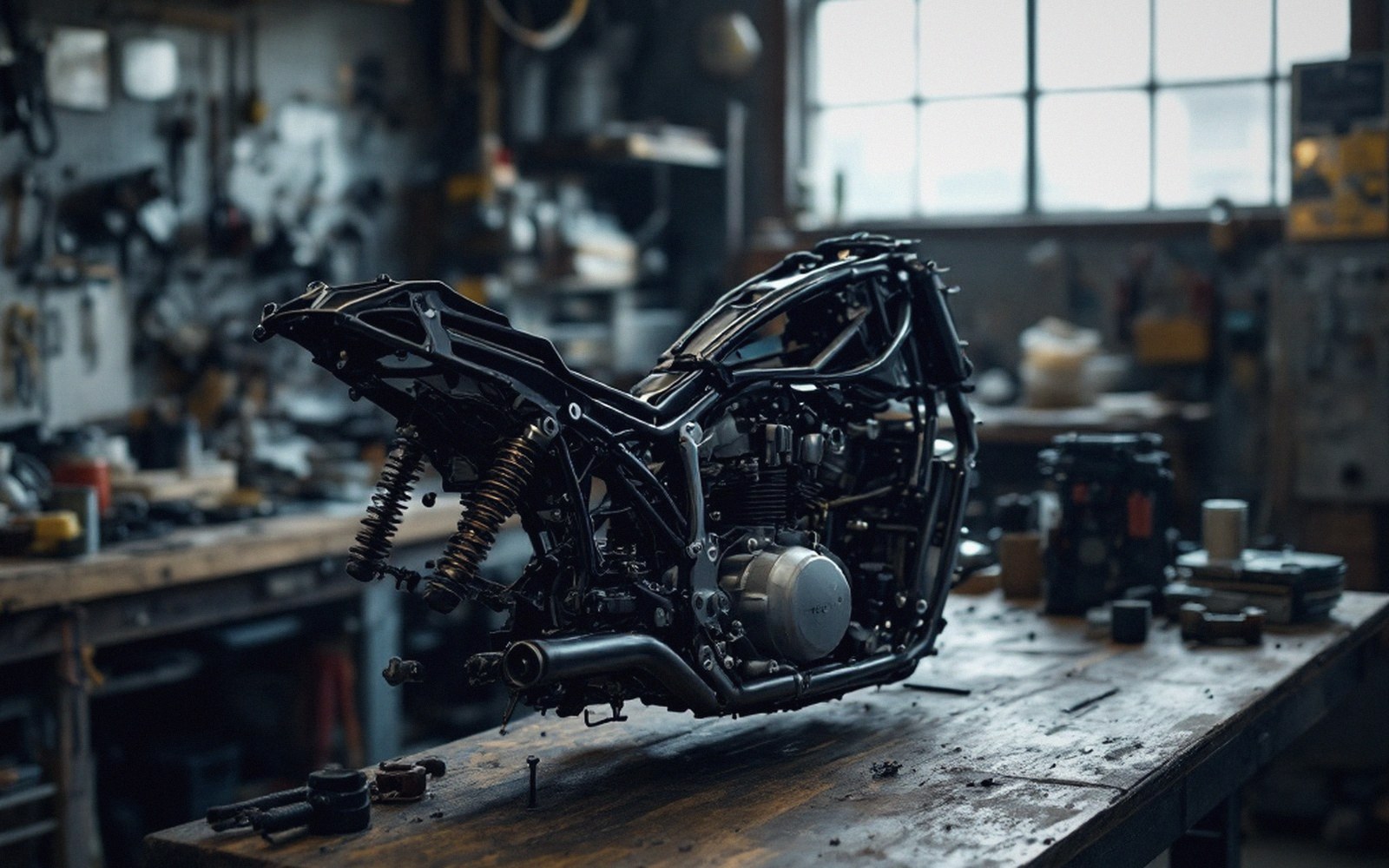
Manufacturers aim for different chassis-balance targets for different categories — sport, touring, adventure — and the ranges differ by a few percentage points. The spread is an honest acknowledgment that there is no correct answer, only a correct answer for a given set of compromises.
Read next
Elsewhere on the site Steering
Countersteering
Above walking pace you turn by pushing the bar away from the corner and the machine falls into the turn.
 The Front End
The telescopic fork
Almost universal and structurally poor: it bends under braking and its damping fights its own suspension duty.
 Engine as Layout
The flat twin
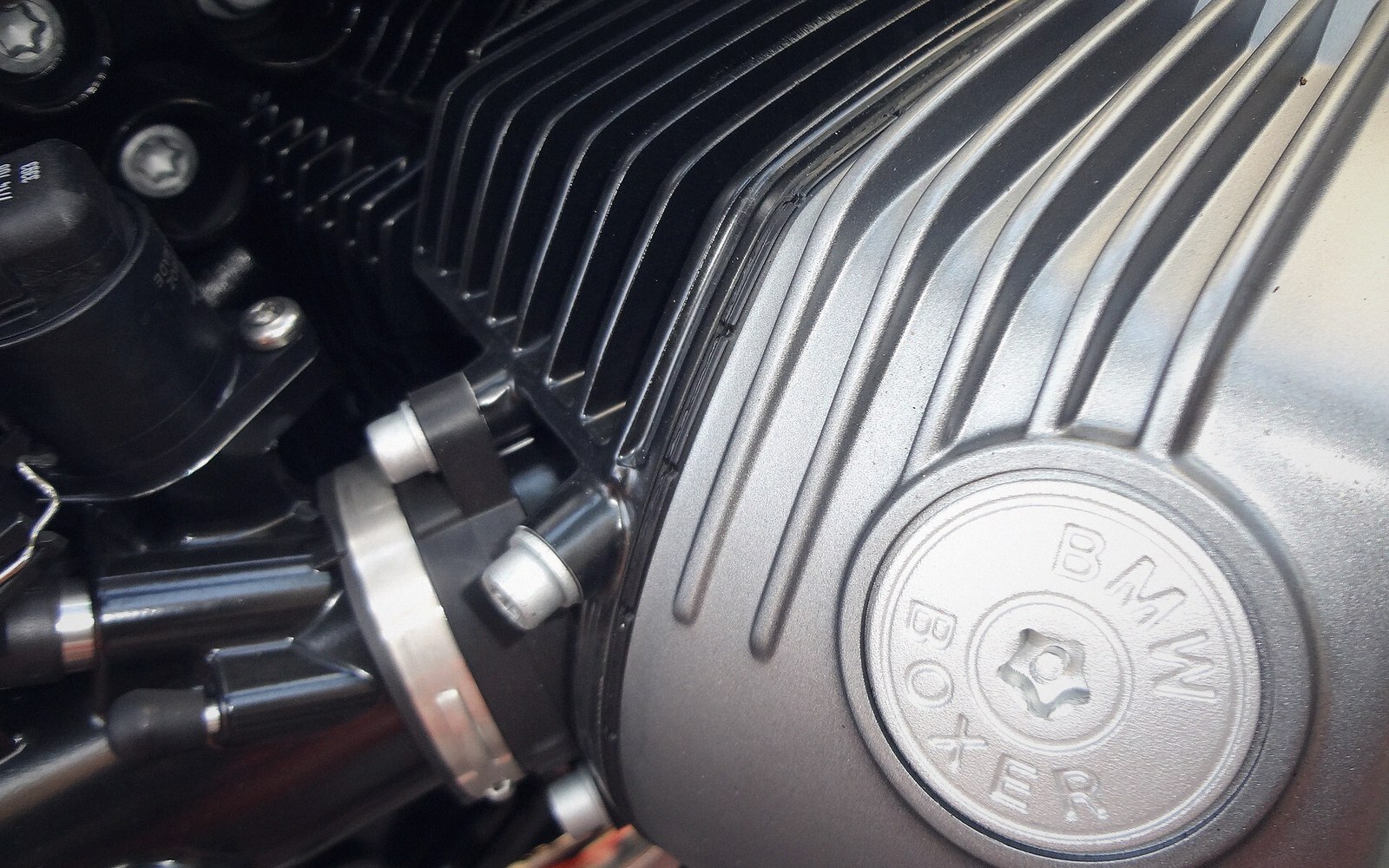
Cylinders in the airflow and mass carried low, at the cost of width and a torque reaction when you blip it.