Trellis and spine
Two routes to the same stiffness: one built from triangles, the other from a single large tube — and the choice determines what the engine costs the chassis.
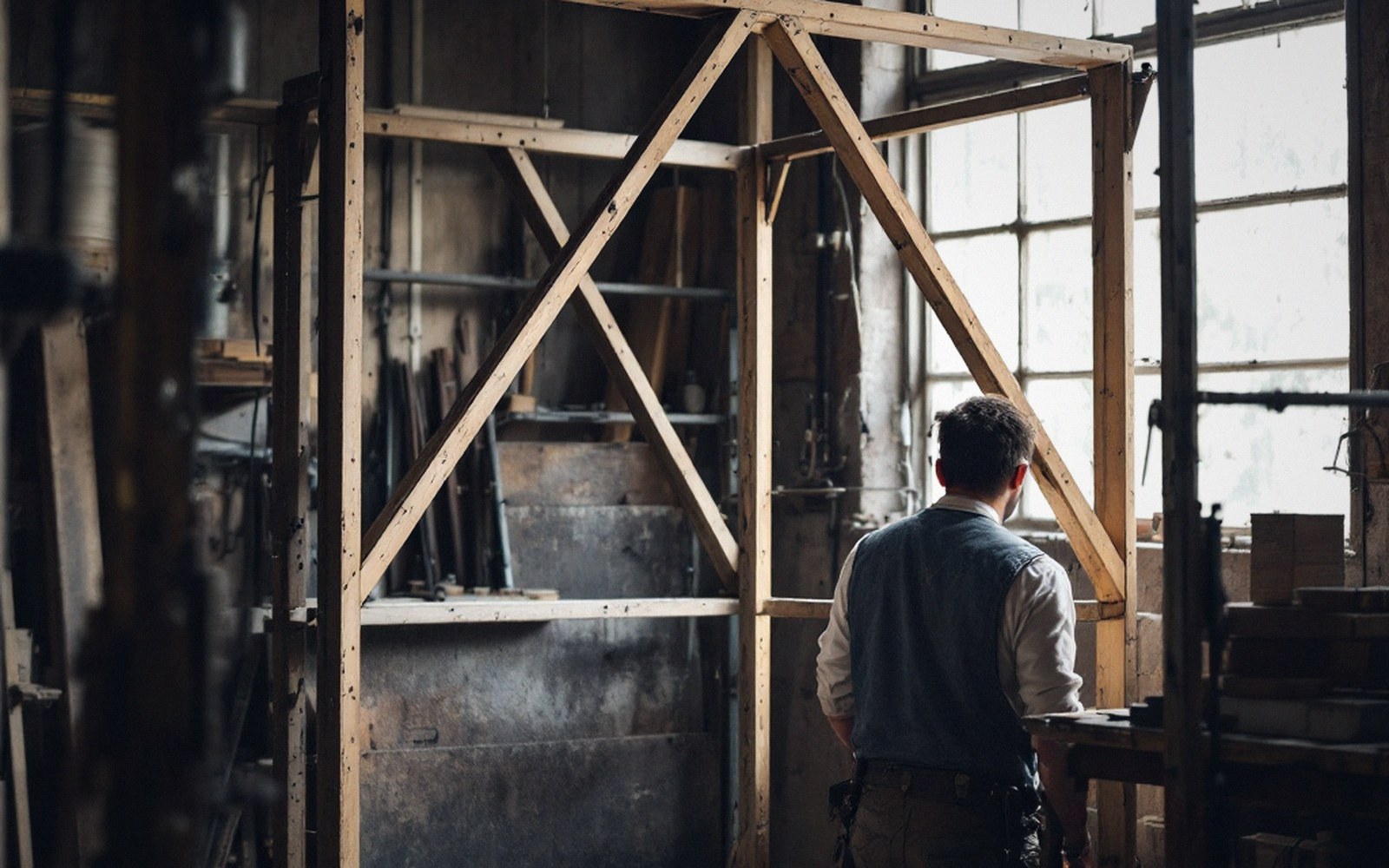
Structure by triangles
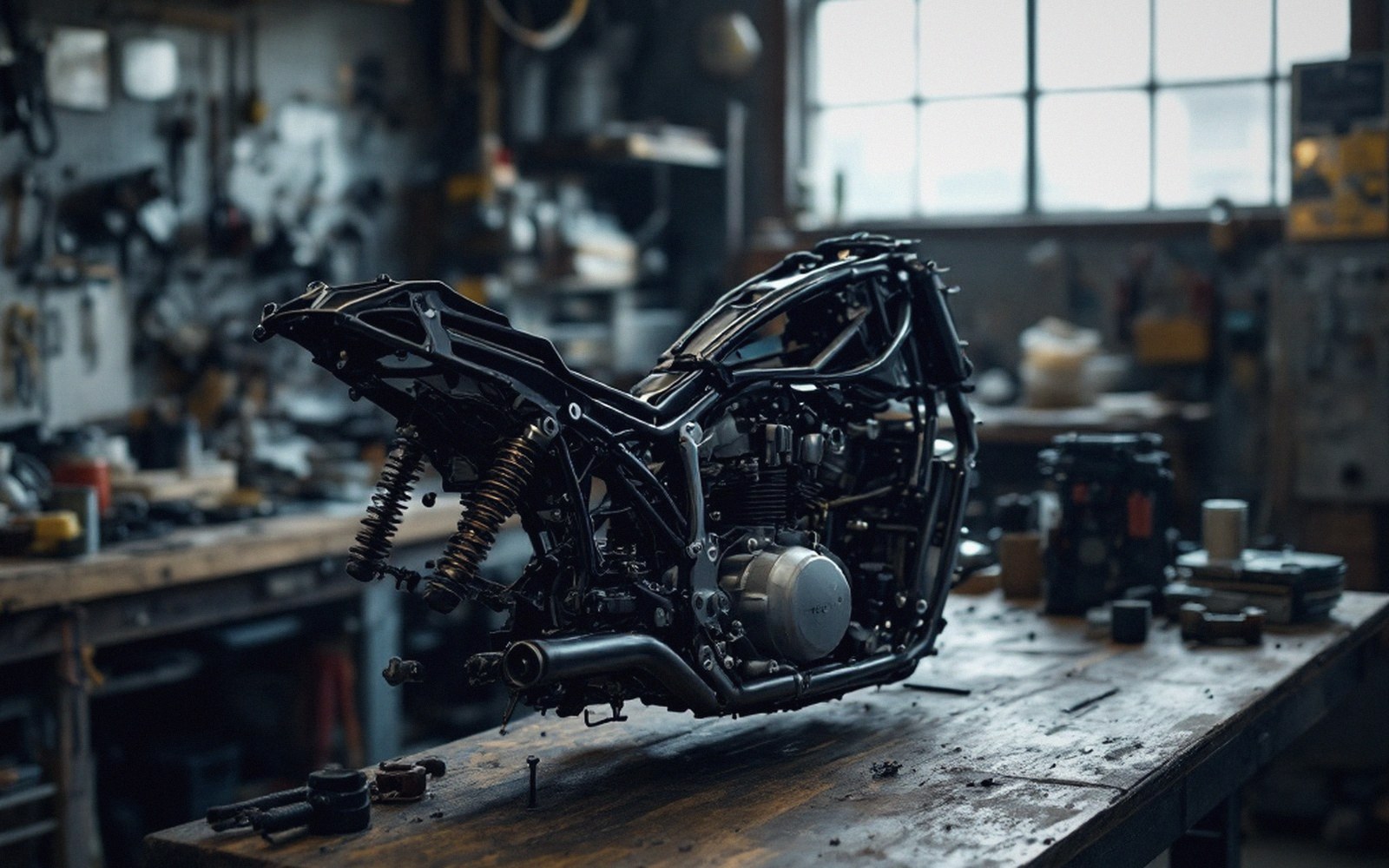
A trellis frame — traliccio in Italian, the term Ducati engineers in Bologna have long used — is a lattice of small-diameter steel tubes arranged so that every load resolves into tension or compression along a tube's own axis. Tubes in pure axial load are extraordinarily efficient: a thin wall carries a great deal of force before it buckles or yields. That means a trellis can reach competitive stiffness at low mass, using round-section steel that is cheap to source, easy to cut and straightforward to weld. The geometry is visible; a skilled fabricator can see what each member is doing. This matters when a frame needs to be repaired after a crash rather than scrapped.
The penalty is complexity. A trellis needs many joints, and joints are where tolerance errors accumulate. Every tube-end must be cut to a compound angle, fitted and jigged before welding, then checked for distortion as the structure cools. On a production line this demands fixtures of considerable precision; on a small-batch machine it demands an experienced welder. The result — when done well, as Ducati has demonstrated across decades of both road and racing machinery — is a frame that is stiff in bending and torsion, light enough to matter, and repairable in the field. When done badly, a poorly jigged trellis is a source of asymmetry that neither measurement nor feel can easily locate.
Structure by section
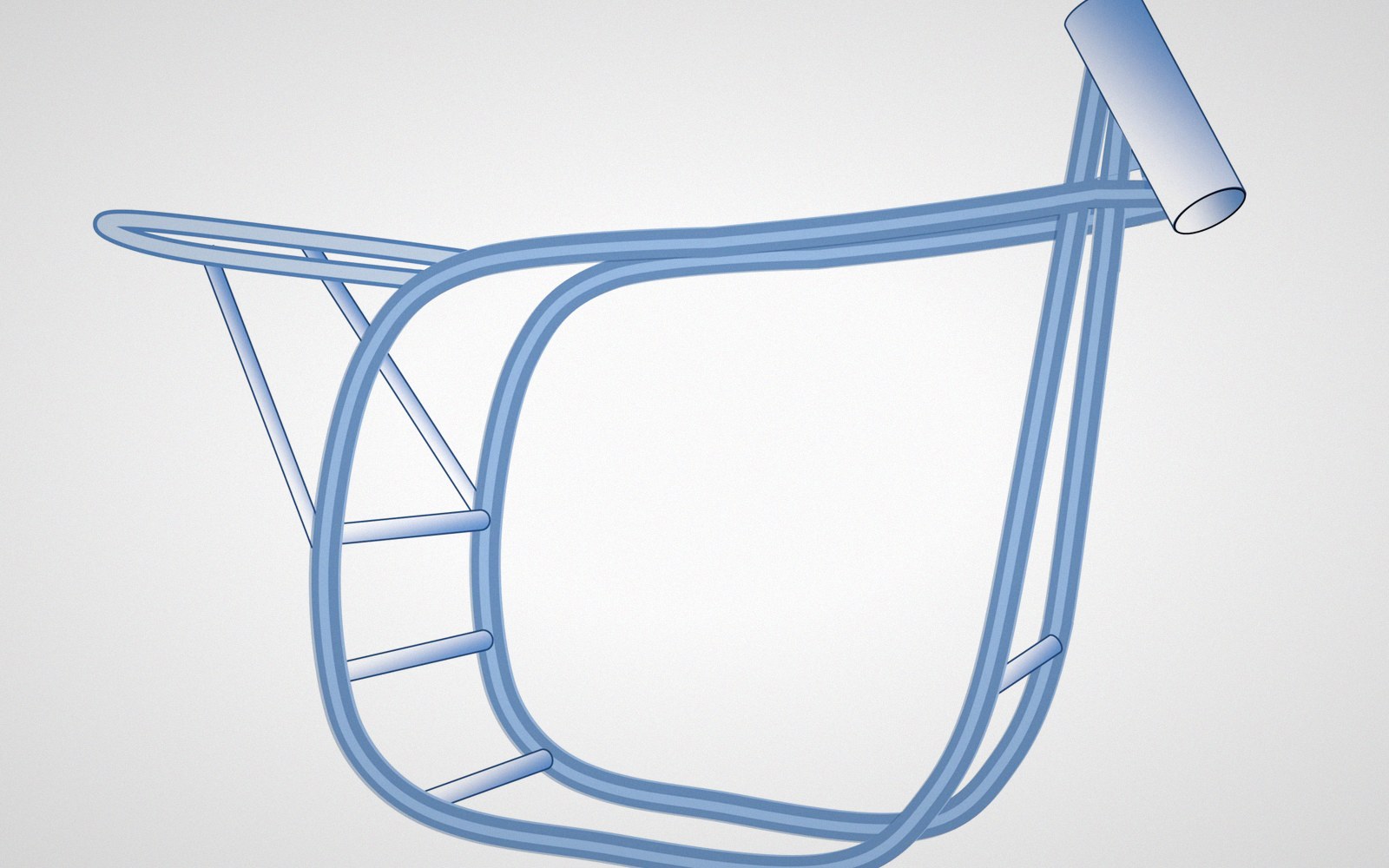
A spine or backbone frame works by a different logic entirely. One large-section beam — rectangular, round or cast in aluminium alloy — runs from the steering head to the swingarm pivot, and it carries bending and torsion through the second moment of area of the section itself rather than through triangulated force paths. The larger the section, the greater the resistance to bending; this is why a 100 mm aluminium box beam can match a trellis in stiffness while using far fewer separate parts. Honda's engineers in the 1980s exploited this principle when they moved Grand Prix-derived twin-spar aluminium frames onto production machines, a configuration that has since become effectively the default for Japanese sportbikes.
The spine's structural advantage is manufacturing consistency. A large-section extrusion or casting has a geometry that does not depend on the jig-and-weld sequence of dozens of small tubes; it is either right or it is not, and that is measurable in one check. The mass of the section itself is the cost: a large-section beam that achieves high stiffness will be heavier than a well-optimised trellis built from the same material, though this penalty is smaller in aluminium than in steel.
The more consequential trade-off is spatial. A spine frame that runs down the centre of the machine occupies exactly where an engine's airbox, carburetion or throttle bodies want to be. A backbone can force the intake path into awkward geometry, or push engine mounting points to positions that do not suit the engine's own centre of mass. Frames that treat the engine as a stressed member sidestep part of this conflict — the spine terminates at the engine cases and the engine itself carries load — but that solution introduces its own servicing costs.
What the choice really decides
Neither architecture is inherently superior. The trellis reaches its full potential in steel, with small-diameter chromoly tube and careful triangulation; it rewards low-volume manufacturing and hand-finishing. The large-section spine — whether a fabricated aluminium twin-spar or a cast magnesium backbone — rewards high-volume stamping, precision casting and automated welding. Ducati's trellis frames and BMW Motorrad's boxer-era tubular steel designs occupy one corner of this map; the aluminium twin-spars found on virtually every Japanese litre-class sportbike occupy another. Between them sit hybrids: a steel trellis front section mated to cast aluminium rear sections, letting each material do what it does efficiently.
Stiffness in torsion and bending is the common target. How a frame reaches that target shapes where the engine sits, how the suspension mounts, how the machine responds to wheelbase changes, and how much of it survives the first serious crash. The numbers at the end can look similar; the engineering paths to them are not.
Read next
Elsewhere on the site Steering
Countersteering
Above walking pace you turn by pushing the bar away from the corner and the machine falls into the turn.
 Geometry
Rake and trail
The head angle and the distance the contact patch trails behind the steering axis decide how willingly the machine turns and how hard it resists.
 The Front End
The telescopic fork
Almost universal and structurally poor: it bends under braking and its damping fights its own suspension duty.