Damping the Steering
A steering damper quiets the symptom. Understanding what is shaking tells you whether that is acceptable engineering or a warning.
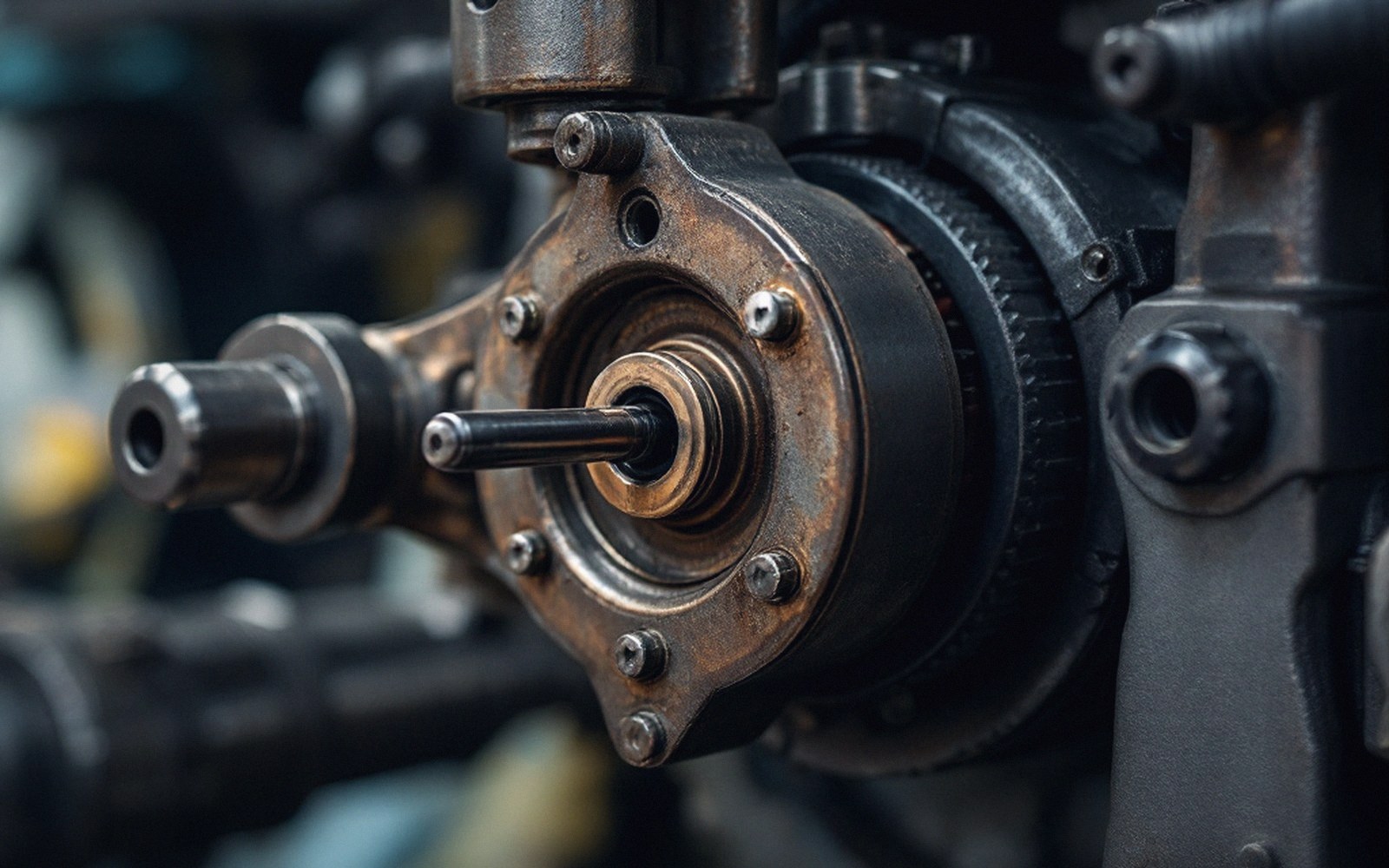
What the Damper Actually Does
A steering damper is a hydraulic resistor bridging the steering head and the frame. When the bars snap left or right faster than any deliberate input, the damper bleeds that energy into heat. The mechanism is straightforward: oil is forced through calibrated orifices, and resistance rises with the square of velocity — a slow wobble meets modest resistance, a fast tankslapper meets a great deal more. That velocity-squared relationship is precisely why dampers are effective against the violent oscillation known as a tankslapper while doing almost nothing to slow ordinary cornering inputs, which are too gentle and too slow to generate significant hydraulic force.

That sounds ideal, and in a narrow sense it is. The problem is mechanical: the damper cannot distinguish between an instability that should be corrected and an instability that should be eliminated. It absorbs both without asking why either appeared.
What It Is Hiding
A steering wobble — the low-frequency oscillation sometimes called a weave — and the high-frequency tankslapper are different phenomena with different causes, and neither one is the damper's fault to cure.

Weave involves the whole rear of the machine yawing and rolling at frequencies typically between one and four hertz. Its causes include inadequate torsional stiffness in the frame or swingarm, tyre characteristics operating near their limits, and weight distribution that places too little load on the front wheel at speed. A damper fitted at the steering head acts on the front end; weave originates further back. The damper can partially mask the symptom at the bars because the front wheel is being dragged through the oscillation, but the underlying dynamics continue unchanged.
Tankslapper — the rapid, violent bar oscillation above roughly eight hertz — typically follows a large disturbance: a wheel lifting over a crest, a patch of gravel, braking hard enough to unload the front tyre momentarily. Geometry matters here. Rake and trail determine the self-centering force that damps wobble naturally; a machine with generous trail carries inherent mechanical damping. Reduce trail to quicken steering response, and you reduce that self-centering effect. A hydraulic damper is then compensating, deliberately, for a geometry choice. That is a known engineering trade-off, and it is honest — provided it is recognised as such.
What is less honest is fitting a damper to a frame that flexes at the wrong frequency, or to a swingarm that is insufficiently stiff laterally, and declaring the problem solved. The oscillation is attenuated. The cause is still present. At some combination of speed, load and road surface, the damper's authority runs out.
Measuring the Instability, Not Just the Symptom
The distinction between masking and fixing becomes clearest when you instrument the machine. Steering-head angle sensors and lateral accelerometers fitted at the frame and at the swingarm pivot will show whether an oscillation begins at the front or travels forward from the rear. Instrumented testing of this kind is how development engineers locate the source — a wobble that appears first in the swingarm data is a rear-end problem regardless of where the rider's hands feel it.

Progressive-rate dampers, and the electronically controlled units fitted to a number of current machines, improve on fixed-rate valving by adjusting resistance continuously. They are better at managing the velocity-squared relationship across a wider speed range, and they can be tuned — softened for slow-speed manoeuvring, stiffened for high-speed stability. What they cannot do is change their own point of attachment. A steering damper measures motion at the steering head and acts there. If the instability is generated twelve inches further back, the damper is working downstream of the problem.
The right question to ask of any damper installation is not whether it works but what it is working on. If the geometry and structure are sound and a residual sensitivity remains — inevitable in any design that trades trail for agility — then hydraulic resistance at the steering head is a clean, calibrated solution. If the damper is the only thing standing between the rider and a frame that wants to oscillate, the engineering conversation needs to start further back.
Read next
Elsewhere on the site Steering
Countersteering
Above walking pace you turn by pushing the bar away from the corner and the machine falls into the turn.
 Geometry
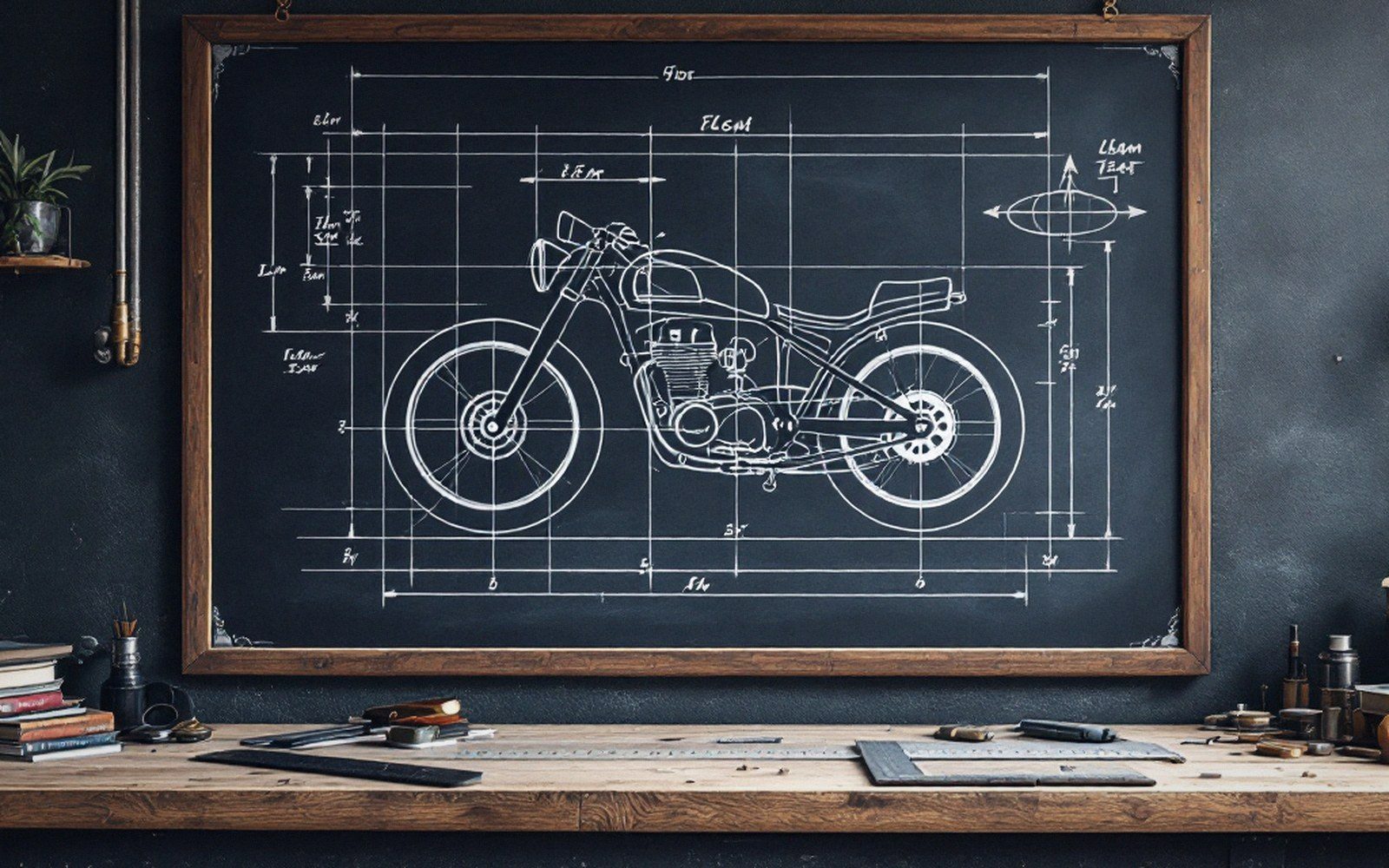
Rake and trail
The head angle and the distance the contact patch trails behind the steering axis decide how willingly the machine turns and how hard it resists.
 The Front End
The telescopic fork
Almost universal and structurally poor: it bends under braking and its damping fights its own suspension duty.